Al-Alimi calls for international action to deter the Southern Transitional Council: Details of the crisis

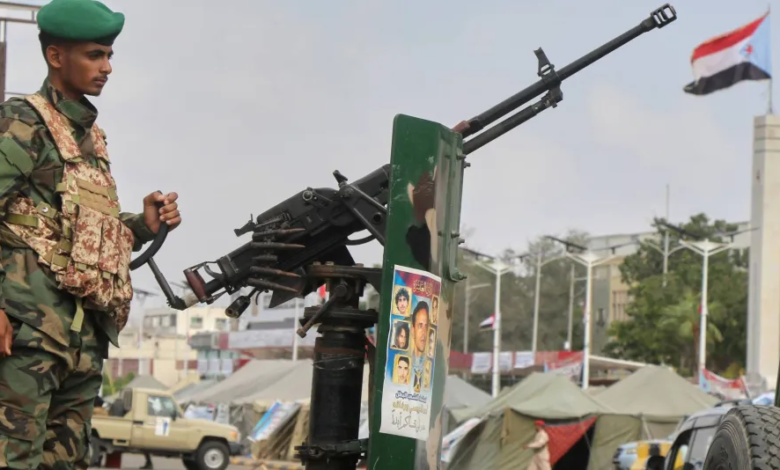
In a striking development reflecting the depth of the political crisis within the Yemeni government, the head of the Presidential Leadership Council, Dr. Rashad al-Alimi, called on the international community to take a unified and collective stance to deter what he described as the "rebellion" of the Southern Transitional Council. This call comes at a time when the liberated governorates are witnessing sharp political and military tensions that threaten the cohesion of the council, which was formed with the aim of unifying ranks to confront the Houthi group.
Background to the tension within the Presidential Leadership Council
This tension was not a sudden development, but rather an extension of fundamental differences in visions and objectives among the components of the Presidential Leadership Council, which was established in April 2022 in the Saudi capital, Riyadh. While Al-Alimi and other factions within the council seek to restore state institutions and preserve Yemeni unity as a top priority, the Southern Transitional Council adopts a clear project aimed at restoring the state of South Yemen (as it existed before 1990). This creates ongoing friction in political decisions, administrative appointments, and control on the ground in Aden and the surrounding governorates.
Al-Alimi bases his latest call on international references and previous agreements, most notably the “Riyadh Agreement” and the Riyadh consultations, which stipulated the integration of military and security formations under the umbrella of the Ministries of Defense and Interior, a clause that still faces major obstacles in implementation on the ground, which weakens the authority of the central state.
The importance of the international stance and its expected impact
Al-Alimi's call is of paramount importance given the pivotal role played by the international community, particularly the countries sponsoring the political process in Yemen (the Quartet) and the Security Council, in maintaining the stability of legitimate institutions. Observers believe that any erosion of legitimacy would directly benefit the Houthi group, potentially complicating the UN envoy's efforts to renew the truce and initiate comprehensive peace negotiations.
Regionally, the stability of Yemen is a top priority for Saudi Arabia and the United Arab Emirates, which lead the Arab coalition. Therefore, any internal escalation between these former allies could necessitate urgent diplomatic intervention from Riyadh and Abu Dhabi to mend the rift and prevent the situation from spiraling into military confrontations that could reshuffle the cards in the south.
Potential repercussions on the Yemeni scene
The ongoing tension between Al-Alimi and the Southern Transitional Council could lead to a complete paralysis of the internationally recognized government, further exacerbating the already dire economic situation and deepening the suffering of citizens amidst the plummeting value of the national currency and the deterioration of basic services. Therefore, the call for a firm international stance aims primarily to safeguard state institutions from collapse and enforce adherence to the principles of partnership and consensus upon which the Presidential Council was founded, ensuring that the focus remains on restoring the state and achieving the desired peace.