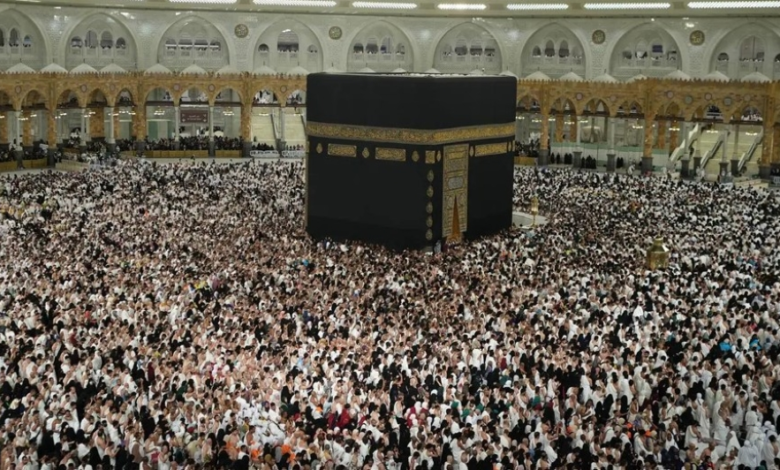
The circumambulation area (Mataf) is the beating heart of the Islamic world, and the most majestic and spiritual scene on earth. From the first moment the foundations of the House were raised by the Prophet Abraham and his son Ishmael, peace be upon them, this place has been the center of the universe and a refuge for hearts, witnessing the oldest collective ritual known to mankind, and a stage for continuous worship that has not been interrupted throughout the centuries, where differences fade away and hearts unite around the Holy Kaaba.
The historical development of the circumambulation area
The circumambulation area (Mataf) was not merely a fixed geographical space; it underwent numerous historical phases reflecting the dedication of caliphs, sultans, and kings throughout the ages to serving the Two Holy Mosques. From the earthen floor of the early eras, through the expansions of the Umayyad and Abbasid periods, to the Ottoman architecture, the goal remained the same: to facilitate the circumambulation. With the dawn of the prosperous Saudi era, the Mataf witnessed unprecedented transformations, undergoing a massive expansion and the removal of buildings that had previously obstructed the circumambulation, resulting in an architectural masterpiece that meticulously considers every engineering and environmental detail.
Smart engineering to serve reverence
The Mataf (circumambulation area) today embodies a unique architectural philosophy that places the worshipper at its center. Here, architecture is not for show, but rather serves devotion. This is evident in the choice of Thassos marble for the flooring, which possesses rare physical properties that allow it to absorb moisture and reflect sunlight, keeping the floor cool even at midday. This enables worshippers to perform their rituals barefoot in complete comfort. Furthermore, the slopes and drainage systems have been meticulously designed to ensure the Mataf dries immediately after washing or rainfall.
Crowd management and global impact
The grandeur of the circumambulation area (Mataf) extends beyond its architecture to its sophisticated crowd management and operational system, one of the most complex in the world. This system relies on extensive studies of human movement flow, ensuring the smooth flow of circumambulation and distributing pilgrims in a way that prevents overcrowding and congestion, especially during peak seasons like Hajj and Ramadan. This meticulous organization reflects the Kingdom of Saudi Arabia's commitment to Vision 2030, which aims to accommodate millions of Umrah and Hajj pilgrims annually, thus reinforcing the Kingdom's position as the custodian of the Islamic holy sites and underscoring its leading role in serving the guests of God.
Spirituality at the heart of modernity
Despite all the trappings of modernity and technological advancement, the circumambulation area (Mataf) retains its profound spiritual identity. Modern pathways, carefully planned lighting, and sophisticated air conditioning systems all work silently to preserve the dominant spiritual atmosphere. Here, the pilgrim feels connected to an enduring historical tapestry, treading the paths trod by prophets and righteous individuals, in a spiritual experience where tears of devotion mingle with supplications of hope, affirming that this place will forever remain a symbol of monotheism and the focus of Muslims' attention until the Day of Judgment.