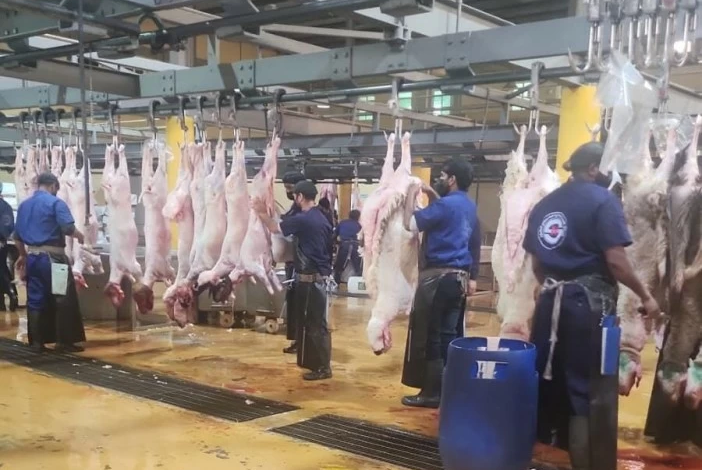
Public markets and butcher shops in Taif Governorate witnessed a significant surge in meat prices with the arrival of Ramadan, reaching record highs that sparked consumer discontent. Field inspections revealed that the price of a kilogram of lamb exceeded 80 riyals, with clear price discrepancies between different shops, raising questions about market regulation mechanisms during peak demand seasons.
Price details in Taif markets
According to available data and local reports, prices varied significantly depending on the type of livestock, with approximate prices as follows:
- Goat meat: reached 75 riyals per kilo.
- The price of veal (calves) reached approximately 70 riyals per kilo.
- Camel meat: It settled at 60 riyals per kilo, registering a slight decline compared to other types.
Market participants attribute this rise to the "supply and demand" theory, noting that the Ramadan season usually witnesses double the demand from families to provide the necessities for Ramadan meals, which prompts traders to raise prices in the absence of a mandatory price ceiling.
Economic context and seasonal impact
This price surge is part of a recurring seasonal trend, as Ramadan marks the peak of food consumption in Saudi Arabia and other Muslim countries. Meat is a key ingredient in traditional Ramadan dishes such as soup, samosas, and kabsa, placing additional pressure on local supply chains. While Taif is a significant contributor to the region's livestock, the increased seasonal demand often leads to price imbalances, directly impacting household budgets, particularly given the current global economic challenges.
The position of the Ministry of Commerce and Municipal Control
In response to consumer inquiries, the Taif Municipality clarified that its role is limited to oversight aspects related to public health, hygiene, slaughter safety, and ensuring compliance with municipal regulations. For its part, the Ministry of Commerce confirmed that meat prices are not subject to fixed pricing but are determined by free market mechanisms.
However, the ministry stressed the need for commercial establishments to adhere to transparency, obligating them to display a clear price list for consumers. The ministry warned that it would apply the prescribed penalties to violators, which include:
- No price tag.
- Refrain from issuing invoices.
- Lack of electronic payment methods.
The ministry called on citizens and residents to report any commercial violations through the "Commercial Report" application or the unified number 1900.
The residents' demands: a return to selling by weight
Faced with these high prices, a number of Taif residents called for radical solutions that go beyond traditional oversight. Proposals emerged to reinstate the "livestock by weight" system in public markets, a system that was previously in place and ensured fair pricing for both buyers and sellers. Consumers believe that the lack of accurate scales and the reliance on arbitrary estimation or selling "by the head" contribute to price inflation and the exploitation of seasonal demand to unjustifiably increase profit margins.