
Mexico City experienced moments of tension and anticipation on Friday after a powerful earthquake struck the country, measuring 6.5 on the Richter scale, according to the National Seismological Service. The geological event triggered emergency protocols at the highest levels, including the evacuation of the presidential palace during a live broadcast.
Details of the incident and evacuation of the presidential palace
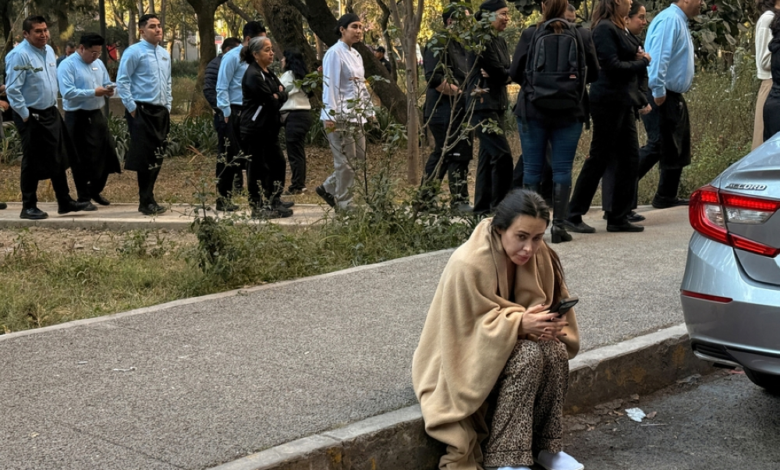
In a scene captured by cameras and broadcast by international media, Mexican President Claudia Sheinbaum was forced to cut short her usual morning press conference and leave the room immediately. This came in response to the sounding of earthquake sirens, which warned of an imminent tremor, prompting the evacuation of the National Palace to ensure the safety of those present.
After a few minutes of anticipation, President Sheinbaum returned with the journalists to resume the conference, confirming in initial statements that no reports of serious damage had been received in either the capital, Mexico City, or in the state of Guerrero, which was closest to the epicenter of the earthquake.
Geological data and epicenter
Official data indicated that the earthquake's epicenter was located approximately 15 kilometers from the San Marcos area in the southern state of Guerrero, at a depth that made it clearly felt by residents of the capital, despite being about 230 kilometers away. The U.S. Geological Survey also recorded the earthquake and its timing, noting the ongoing tectonic activity in the region.
Why is Mexico an active earthquake hotspot?
This event is particularly significant given Mexico's complex geological makeup. The country lies above a seismically active region known as the Pacific Ring of Fire, an area where several tectonic plates meet. Most powerful earthquakes are caused by the subduction of the oceanic Cocos Plate beneath the continental North American Plate, generating enormous energy that is released as seismic activity.
Furthermore, Mexico City suffers from a unique geological vulnerability, as the city was built on soft clay soil that was once the bed of an ancient lake (Lake Texco). This clay-like nature acts as an amplifier of seismic waves, making buildings more susceptible to shaking and collapse compared to areas built on solid rock, which explains the strong feeling of earthquakes even when their epicenters are far away.
A painful history and lessons learned
This earthquake brings back painful memories for the Mexican people, who have suffered devastating natural disasters throughout history. Perhaps the most prominent of these was the catastrophic earthquake of September 19, 1985, which measured 8.1 on the Richter scale and killed nearly 13,000 people, destroying large parts of the capital. These historical events prompted Mexican authorities to develop one of the most efficient early warning systems in the world, as well as to cultivate a culture of rapid response and conduct regular evacuation drills, as clearly demonstrated in the disciplined handling of today's incident by the president and her team.