The Mexican president responds to the Donro doctrine and rejects American tutelage

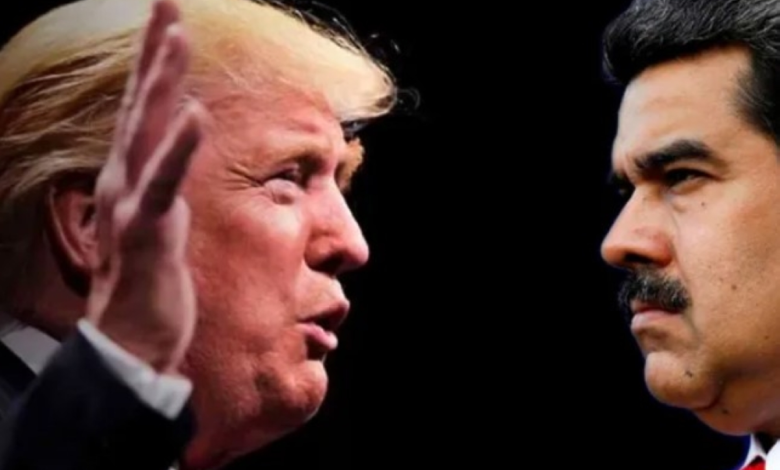
In a notable diplomatic escalation reflecting strained relations between Latin American countries and the United States, Mexican President Claudia Sheinbaum her country's rejection of foreign domination, emphasizing that the Americas "do not belong to any ideology or power." This strong statement came as a direct response to the recent US military operation in the Venezuelan capital, Caracas, which resulted in the arrest of President Nicolás Maduro and his transfer to New York.
Historical context: From Monroe to "Donroe"
To understand the depth of this dispute, one must return to the historical roots of American foreign policy in the region. In 1823, the fifth American president, James Monroe, launched what became known as the "Monroe Doctrine," which was ostensibly intended to prevent European colonial intervention in the Americas, but over time, in the eyes of many Latin American countries, it turned into a pretext for imposing American hegemony.
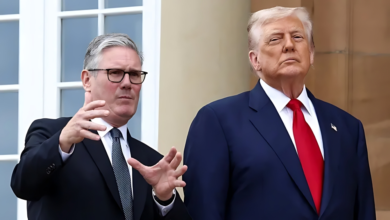
US President Donald Trump reignited this debate with his recent remarks at a press conference, where he announced an update to this policy under the name "Donroe Doctrine ." Trump stated, "The Monroe Doctrine is very important, but we have largely moved beyond it," explaining that the new name combines his first name, "Don," with his predecessor's name, "Roe," in a symbolic reference to merging history with his personal ambition for dominance.
Details of the military operation and its repercussions
On the ground, US forces carried out a targeted operation early Saturday morning in Caracas, arresting Maduro and his wife and transporting them by air to the United States for trial on terrorism and drug trafficking charges. Trump commented on the operation, saying, "As part of our new national security strategy, American dominance in the Western Hemisphere will never again be challenged.".
The Mexican position and the defense of sovereignty
Sheinbaum was quick to respond, asserting that the continent "belongs to the people of each of the countries that comprise it." This statement carries significant strategic weight, as Mexico positions itself as a diplomatic bulwark against what it perceives as an expansion of American influence that threatens the national sovereignty of Southern nations.
Political analyses indicate that this event may drag the region into a new phase of polarization, especially after Trump issued explicit threats to other leftist governments in Cuba, Colombia, and Mexico, demanding greater efforts from the latter in combating drugs, which portends an open diplomatic confrontation over the concepts of national sovereignty versus American national security.