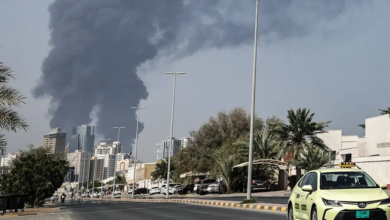
In a significant development in the Arabian Gulf region, reports indicate that Qatar was subjected to a series of attacks originating from Iran, involving the use of approximately 10 drones. This news raises numerous questions about the nature of regional tensions and the future of stability in this vital part of the world, as the use of drones is considered one of the most prominent emerging security challenges facing nations in the modern era.
The context of regional tensions and the drone war
This event cannot be viewed in isolation from the broader context of the Middle East region in recent years. Drones have transformed from mere reconnaissance tools into effective and low-cost strategic weapons, capable of bypassing some conventional radar systems and reaching vital targets. The region has witnessed a significant increase in the use of this technology in asymmetric warfare in recent years, prompting the Gulf Cooperation Council (GCC) states to continuously strengthen their air defense systems to counter these evolving aerial threats.
The strategic importance of the State of Qatar
Any security threats to Qatar are of global, not merely regional, importance, given Doha's pivotal role in the global energy market. Qatar is one of the world's largest exporters of liquefied natural gas (LNG), and any threat to its security or infrastructure could have a significant impact on global energy prices and supply chains, particularly in the current international economic climate. Furthermore, Qatar plays an active diplomatic role as a mediator in numerous complex international issues, making its stability a shared international interest for major powers.
Air security challenges in the Gulf
The recent attack involving 10 drones underscores the need for integrated security and defense capabilities in the Gulf region. Modern states rely on advanced, multi-layered air defense systems to counter various aerial targets, from ballistic missiles to small, low-flying drones. Military experts emphasize that countering drone swarms requires sophisticated detection technologies and electronic jamming systems, in addition to conventional missile interception, to ensure the protection of airspace and vital infrastructure.
Expected impacts and future scenarios
This event is expected to provoke widespread reactions at both the regional and international levels, as world capitals typically call for restraint and the avoidance of escalation that could drag the region into a spiral of violence. This development may also prompt countries in the region to reassess their security strategies and strengthen cooperation to ensure the safety of air and maritime navigation in the Arabian Gulf, a vital artery for the global economy.