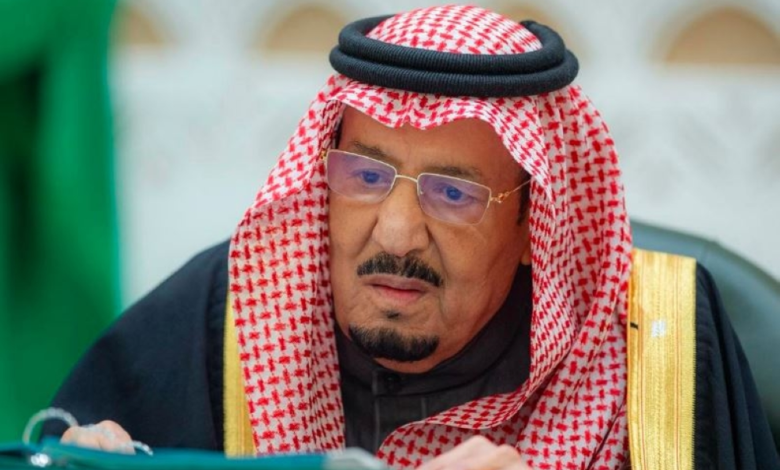

The Custodian of the Two Holy Mosques, King Salman bin Abdulaziz Al Saud, chaired the Cabinet session held today, Tuesday, in Riyadh. During the session, the Cabinet reviewed the current regional and international situation, addressing the rapidly evolving events in the region and ways to enhance stability.
At the outset of the session, the Cabinet expressed the Kingdom of Saudi Arabia’s unequivocal welcome for the launch of the second phase of the comprehensive peace plan in the Gaza Strip. The Cabinet also welcomed the commencement of the official duties of the Palestinian National Committee for the Administration of the Gaza Strip, while simultaneously commending the announcement by US President Donald Trump of the establishment of the “Peace Council.” The Cabinet affirmed the Kingdom’s deep appreciation for the tireless international efforts exerted in this regard to reach this pivotal stage.
The importance of the second phase and the path to institutional stability
This step comes at a crucial and sensitive time, as the Palestinian National Committee's commencement of its duties in managing the Gaza Strip reflects a fundamental shift towards organizing internal affairs and strengthening national institutions. This move is a cornerstone for ensuring the smooth flow of humanitarian and relief aid and for the actual commencement of reconstruction efforts eagerly awaited by the residents of the Strip. Political circles view empowering this committee as a necessary step to fill the administrative vacuum and ensure the existence of a unified body capable of engaging responsibly with the international community and meeting the basic needs and service requirements of the population.
International role and strategic partnership for peace
In a related context, US President Donald Trump's announcement of the establishment of a "Peace Council" stands as tangible evidence of renewed international momentum to support regional stability and prevent the escalation of conflicts. The Kingdom of Saudi Arabia consistently emphasizes the importance of effective partnerships with influential international powers, foremost among them the United States, to advance political and diplomatic solutions. The new Peace Council is expected to play a crucial coordinating role among the relevant parties to ensure the sustainability of the ceasefire and to monitor the implementation of the comprehensive peace plan in a way that guarantees the rights of all parties and achieves lasting regional security.
Saudi Arabia's firm stance and support for the Palestinian cause
This Saudi welcome is an extension of the Kingdom's longstanding and unwavering stance on the Palestinian cause and its continued support for the rights of the Palestinian people. Riyadh has consistently called, in all international forums, for the necessity of finding just and comprehensive solutions that end the humanitarian suffering, in accordance with international resolutions and the Arab Peace Initiative. The Kingdom consistently emphasizes that genuine peace is the only strategic option that guarantees security and stability for the entire Middle East region, and opens broad horizons for economic development and prosperity, instead of the cycle of violence and wars.
In conclusion, the Cabinet renewed its hope that these international and regional efforts would be crowned with success, and that the second phase of the plan would mark the beginning of a new era of stability and development, calling on the international community to continue supporting these positive moves to ensure that there is no return to the cycle of tension, and to achieve the aspirations of the peoples of the region to live in lasting safety and peace.