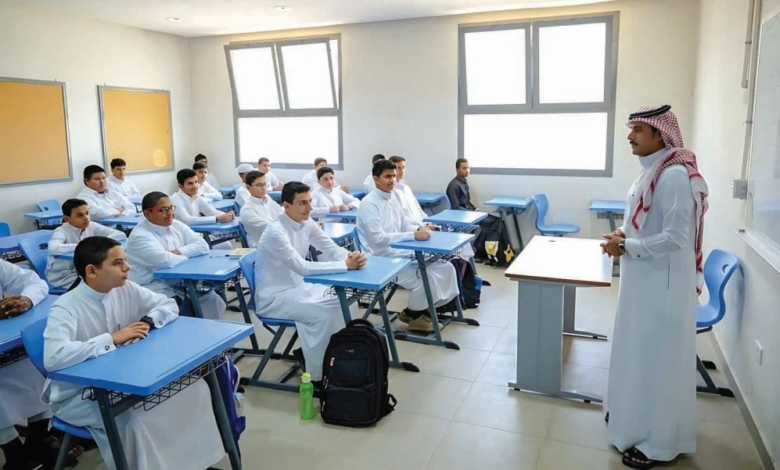

In a decisive step aimed at strengthening school discipline and improving the efficiency of the education system, the Ministry of Education has established strict rules for monitoring student attendance, emphasizing that frequent absences pose a significant challenge that threatens the stability of the educational process and students' academic future. These measures are implemented in accordance with the updated Code of Conduct and Attendance, which balances firmness in applying disciplinary penalties with adherence to the regulations of the Child Protection Law.
Mechanism for calculating attendance and deduction grades
The ministry revealed the precise details of the attendance policy, allocating 100 points to be included in the student's overall grade point average. Under this policy, one point is deducted for each day of absence without a valid excuse. This precise calculation aims to instill the value of commitment and regular attendance in students, making school attendance a fundamental pillar in evaluating their overall performance, rather than a mere routine procedure.
Absence rate of 10%: The red line for expulsion
The ministry has established a strict, non-negotiable threshold: a student's absence exceeding 10% of total school days without an acceptable excuse during the academic year. The ministry emphasized that reaching this threshold will result in immediate and decisive legal and educational consequences, which vary depending on the student's grade level
- Primary and intermediate levels: Exceeding the percentage results in the student being denied the opportunity to move on to the next academic year, which means repeating the academic year.
- Secondary level: Exceeding the allowed limits will result in the student being barred from moving to the next semester or taking the final exams for the registered courses.
The educational context and the importance of discipline
These decisions come amidst fundamental transformations in the Kingdom's education sector, and are in line with the objectives of Vision 2030, which focuses on the quality of educational outcomes. School discipline is a key driver for improving learning outcomes, as educational studies have demonstrated a strong correlation between regular attendance and academic excellence. Through these regulations, the Ministry aims to eliminate the phenomenon of mass absenteeism, particularly in the weeks leading up to holidays or exams, to ensure the continuity of the educational process with the same efficiency throughout the year.
Integration of roles: Child protection and family responsibility
The Ministry did not overlook the legal and social aspects, linking the application of these penalties to the child protection system. Educational authorities view frequent absences, especially in the early grades, as a warning sign requiring immediate educational and social intervention, not merely a violation deserving of punishment. Regulations emphasize that parental neglect that deprives a child of their right to education is a legal offense, obligating schools to take preventative measures, including involving student counselors and referring cases to the relevant authorities if deliberate neglect detrimental to the student's interests is proven.
Exceptions and systemic flexibility
To ensure fairness, the Ministry clarified that justified absences are subject to systemic flexibility, provided the excuse is submitted within the specified timeframe and documented through approved platforms (such as the Madrasati platform or the Noor system). It emphasized that health reasons and compelling emergency circumstances are not included in the percentage of absences that necessitate repeating a grade, although they are subject to monitoring to ensure they do not negatively impact the student's academic performance. The Ministry also stressed the importance of addressing the underlying causes of absence, whether psychological or health-related, before resorting to disciplinary measures.