
The Middle East is witnessing a significant geopolitical shift marked by growing Saudi-Egyptian-Turkish coordination, a development that heralds a new era of regional de-escalation and stability. This rapprochement follows years of stagnation and tension in their relations, forming a strategic triangle comprising the three most influential powers in the Islamic world and the region, thus granting this bloc considerable influence over current events.
Context of the shift from tension to partnership
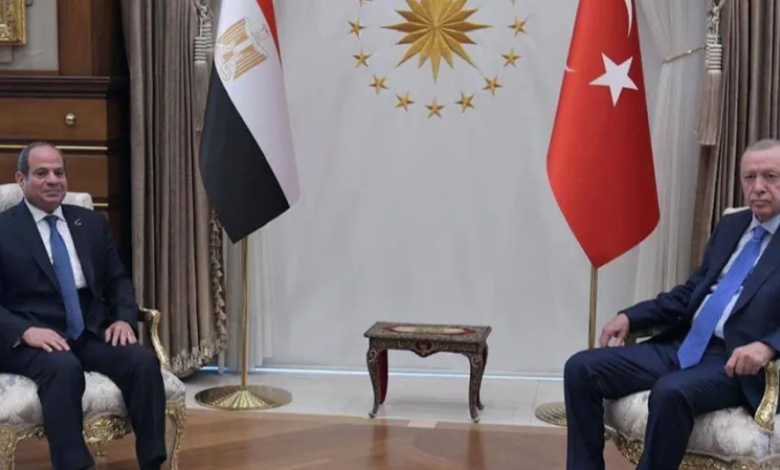
To understand the importance of this coordination, one must consider the recent historical context. The past decade witnessed sharp differences in viewpoints regarding the Arab Spring and the crises in Libya and Syria. However, international and regional developments imposed a new reality that necessitated prioritizing shared interests. This trajectory culminated in high-level reciprocal visits, most notably Turkish President Recep Tayyip Erdoğan's visits to both Saudi Arabia and Egypt, and the visits of Saudi Crown Prince Mohammed bin Salman and Egyptian President Abdel Fattah al-Sisi to Turkey. These visits brought an end to the period of discord and laid the foundation for a new era of strategic cooperation.
Pivotal role in the Gaza file and the Palestinian issue
The aggression against Gaza is at the forefront of this tripartite coordination. The three countries possess diverse leverage points: Egypt is the geographical gateway and historical mediator; Saudi Arabia represents religious, political, and economic weight and is the leader of the Arab Peace Initiative; while Turkey has complex diplomatic relations and the capacity for influential international political discourse. This bloc works to unify the discourse demanding a ceasefire, rejecting the forced displacement of Palestinians, and pushing for a two-state solution as the only path to sustainable stability, thus forming a strong front of pressure on the international community and the United States.
Impacts that extend beyond borders: Libya, Syria, and Red Sea security
The impact of Saudi-Egyptian-Turkish coordination extends beyond the Palestinian issue to other hotspots. In Libya, the Egyptian-Turkish rapprochement has contributed to de-escalating military conflicts and pushing for a negotiated political solution instead of a proxy war. In Syria, joint coordination supports efforts to preserve Syrian territorial integrity and combat terrorism. Red Sea security also stands out as a vital issue, particularly given the tensions affecting navigation in the Suez Canal, making security and intelligence cooperation among the three countries essential for protecting global economic interests.
The economic dimension as a pillar of stability
Finally, the economic aspect cannot be overlooked; the three countries seek to enhance trade and mutual investments as part of their development visions (such as Saudi Arabia's Vision 2030). The political stability resulting from this coordination creates an attractive investment environment and strengthens opportunities for economic integration in the energy, defense, and tourism sectors, directly benefiting the people of the region and bolstering these countries' resilience to global economic crises.