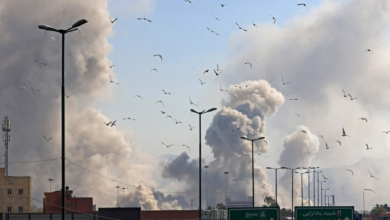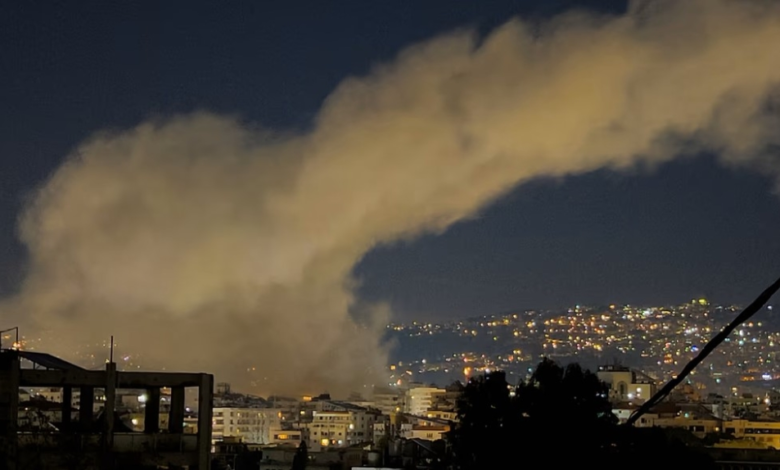

Iranian media reported a missile attack targeting areas east of Tehran, the capital, in a significant development in the escalating tensions in the region. According to Al Arabiya, loud explosions were heard in the eastern part of the capital, creating a state of tension and anticipation. This incident coincides with an official announcement from the Israeli military confirming that it carried out precise strikes targeting Iranian regime infrastructure in the heart of Tehran, a move indicating a shift in the confrontation to a more direct and intense phase.
Details of the attacks and the Iranian response
In a related development, informed Iranian sources reported that the explosions were not limited to the capital, but also extended to the city of Kermanshah in western Iran, a region of strategic and military importance. The Israeli military, for its part, announced that its operations were aimed at targeting the capabilities of the Iranian regime. In response, Iranian air defenses announced that they had intercepted the attacks, claiming to have shot down seven Israeli drones flying over western and southwestern Iran, in an attempt to demonstrate the readiness of their defense systems against airstrikes.
Background of the conflict and the development of the confrontation
This military escalation comes as part of a long series of tensions between the two sides, often waged through what is known as a "shadow war" or via regional proxies. However, directly targeting the capital, Tehran, represents a qualitative shift in the rules of engagement, crossing traditional red lines. Historically, attacks attributed to Israel have focused on nuclear facilities or military bases in remote areas, but taking the fight to the capital reflects a desire to send a firm political and military message to the Iranian leadership.
Strategic importance and regional implications
This attack carries profound strategic implications, as targeting infrastructure in Tehran and Kermanshah opens the entire region to a range of unpredictable scenarios. Domestically, this bombing could exacerbate internal tensions and inflame nationalist sentiments. Regionally, such strikes increase fears of the Middle East sliding into a full-blown confrontation that could destabilize neighboring countries and global energy markets. The international community is watching these developments with grave concern, amid persistent calls for restraint and the avoidance of escalation, which could have disastrous consequences, especially given the complex web of international interests in the region.