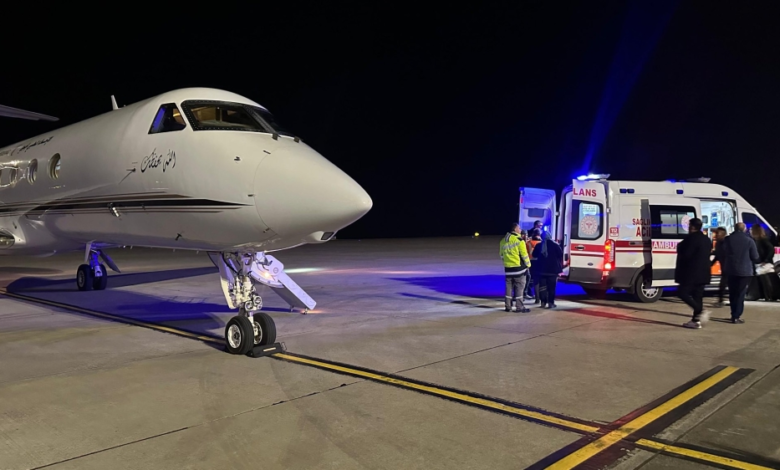
A Saudi citizen was transferred from Türkiye by medical evacuation plane for treatment

The Saudi Embassy in the Republic of Turkey announced on Tuesday the successful medical evacuation of a Saudi citizen from the city of Trabzon to his homeland, via a plane belonging to the Air Medical Evacuation Fleet of the Ministry of Defense, to complete his treatment journey within the Kingdom.
Details of the medical evacuation from Trabzon
The embassy explained via its official account on the "X" platform that this step comes within the framework of the Ministry of Foreign Affairs' ongoing commitment to the care and service of Saudi citizens abroad. Based on its national responsibilities, the embassy initiated procedures to transfer the citizen who suffered a health issue in Trabzon, Turkey. Direct coordination was made for his transfer via a medically equipped aircraft to ensure his safety until his arrival in the Kingdom to receive the necessary medical care.
An integrated system to serve citizens abroad
This operation comes in implementation of the directives of the wise leadership – may God protect them – which places the health and safety of citizens at the forefront of its priorities, whether inside or outside the Kingdom. The Ministry of Foreign Affairs is working in close coordination with the health services of the Ministry of Defense to ensure a rapid response to critical cases requiring immediate transfer, reflecting the efficiency of the government system in managing emergency health crises for citizens in all parts of the world.
Saudi Arabia's leadership in the field of air medical evacuation
The Kingdom of Saudi Arabia possesses one of the largest and most modern air medical evacuation fleets in the Middle East, operated by the Ministry of Defense's Health Services. This fleet is characterized by its "flying hospitals," equipped with state-of-the-art medical equipment and staffed by highly qualified personnel capable of handling critical cases during transport. The fleet's services extend beyond the Kingdom's borders, encompassing the transfer of citizens from various countries around the world, highlighting the immense logistical and medical capabilities the Kingdom has dedicated to serving its people.
Human and social dimensions
The repeated medical evacuations of citizens from various countries reinforce the sense of security among Saudi citizens and affirm that the state is always ready to extend a helping hand to its people in difficult circumstances. This ongoing approach strengthens the Kingdom's position as a nation that cares for its citizens by global standards, where geographical borders do not hinder the provision of necessary healthcare to those in need within the country.
The embassy concluded its statement by confirming that the aircraft that carried out the mission belonged to the Ministry of Defense's health services, noting that these efforts are a practical translation of the leadership's interest in providing the highest levels of care for citizens.