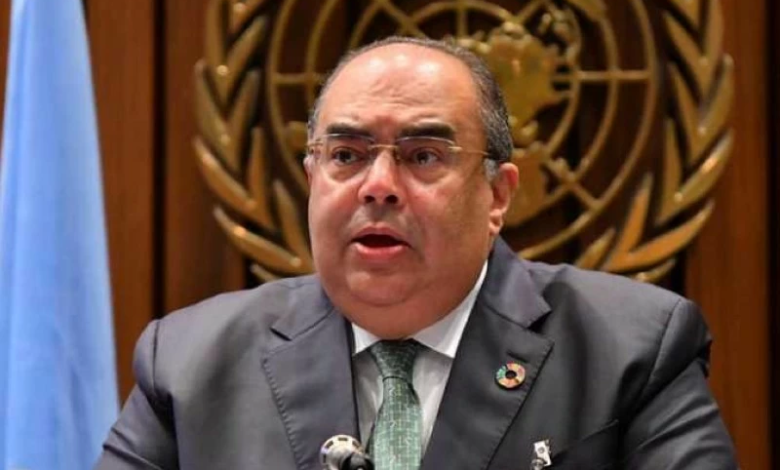
The United Nations Special Envoy on Financing for Development, Dr. Mahmoud Mohieldin, stressed that the recent decision of the US Supreme Court regarding tariffs does not represent the end of President Donald Trump’s economic agenda, noting that the US trade landscape is going through a delicate phase characterized by ambiguity and uncertainty, which may cast a shadow on global trade.
An alternative legal arsenal
Speaking to Al Arabiya Business, Mohi El-Din explained that while the court ruling is significant, it does not completely strip the US president of his tools; the US administration still has an arsenal of alternative legal measures at its disposal. He specifically pointed to the Trade Act of 1974 , which grants the president broad powers to impose tariffs in response to trade practices that Washington deems unfair. This means the legal and economic battle is far from over, and describing the ruling as a "knockout blow" may be premature.
Repercussions of rapid escalation
Muhyiddin drew attention to the speed of President Trump's response, who announced an increase in tariffs from 10% to 15% less than 24 hours after the decision was issued. This rapid escalation raises fundamental questions about the stability of trade policies and leaves markets facing unpredictable scenarios. These moves come within a historical context that has witnessed a shift in US policy toward trade protectionism, prompting concerns among international institutions about the outbreak of trade wars that could further derail already fragile global growth rates.
The crisis of recovered billions
Among the contentious issues raised by Mohiuddin is the question of the financial obligations arising from the decision, with the value of duties that may have to be refunded to importers and companies estimated at between $132 billion and $170 billion . This enormous sum presents the US administration with a significant legal and financial challenge, especially if these previous collections are deemed illegal and therefore subject to repayment, which could impact the national budget and set a legal precedent in the history of US trade disputes.
The fate of international agreements
On the international front, the UN envoy addressed the concerns of Washington's trading allies. Legitimate questions are being raised about the fate of agreements reached under previous understandings, particularly with countries like the United Kingdom and Australia, which had previously settled tariffs at around 10%. The lingering question is: will these countries be subject to the new 15% rate? Or will the previous agreements remain binding? This uncertainty exacerbates the disruption in global supply chains and makes long-term economic planning extremely difficult for both businesses and governments.