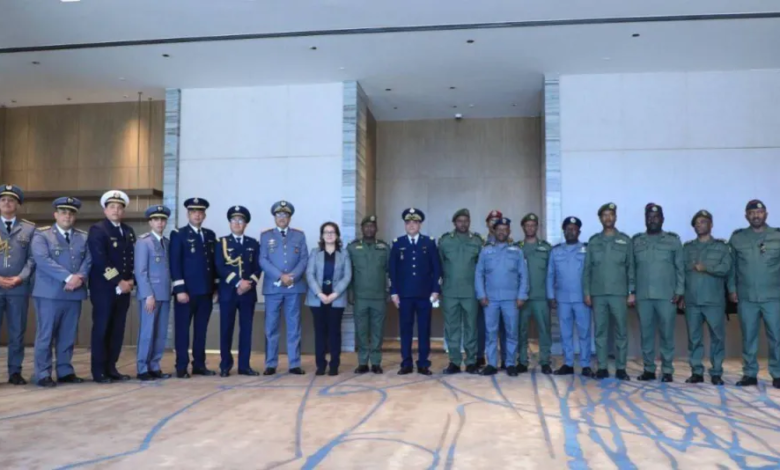

The announcement of enhanced military cooperation between the Kingdom of Morocco and the Federal Democratic Republic of Ethiopia has raised numerous questions in political and media circles, particularly given the ongoing tensions in the Horn of Africa and the Grand Ethiopian Renaissance Dam (GERD) issue. However, analysts and international relations experts agree that this rapprochement between Rabat and Addis Ababa poses no threat to Egypt, and falls within the sovereign policy of states to diversify their strategic partnerships.
Context of Moroccan-Ethiopian rapprochement
This development in Moroccan-Ethiopian relations comes as a continuation of a trajectory that began notably with the historic visit of King Mohammed VI of Morocco to Ethiopia in 2016, a pivotal moment in Morocco's return to the African Union. Since then, Rabat has sought to build strong bridges with East African nations, moving beyond traditional alliances, through economic and diplomatic channels, and now through security and military cooperation.
Observers believe that the military agreements are primarily aimed at exchanging expertise in the areas of counter-terrorism and border security, which are common challenges facing the African continent, whether in the Sahel and Sahara region or in the Horn of Africa, and do not carry any hostile character towards third parties.
The Egyptian position and diplomatic balance
On the other hand, Cairo is well aware of the nature of Moroccan diplomatic moves. Relations between Egypt and Morocco are characterized by their deep-rooted nature and strategic understanding on major issues. Morocco has affirmed on numerous international occasions its full support for Egyptian water security as an integral part of Arab national security. Therefore, Egyptian decision-makers view Morocco's outreach to Ethiopia as part of the Kingdom of Morocco's national interests to enhance its continental presence, and not as an alignment against Egyptian interests.
Strategic and economic dimensions
The military and economic dimensions are inextricably linked; Morocco is leading massive projects in Ethiopia, most notably the fertilizer production platform overseen by the OCP Group (Office Chérifien des Phosphates). This economic interdependence necessitates security and military coordination to protect investments and ensure stability. Experts suggest that having a strong Arab ally like Morocco, with its positive relations with Ethiopia, could be a contributing factor in the future, facilitating rapprochement or playing a quiet mediating role if needed, rather than a source of threat.
In conclusion, this cooperation reflects a maturity in inter-African and Arab relations, where countries have begun to differentiate between legitimate bilateral cooperation and directed alliances, making the Moroccan-Ethiopian rapprochement a natural step in a multipolar global context.