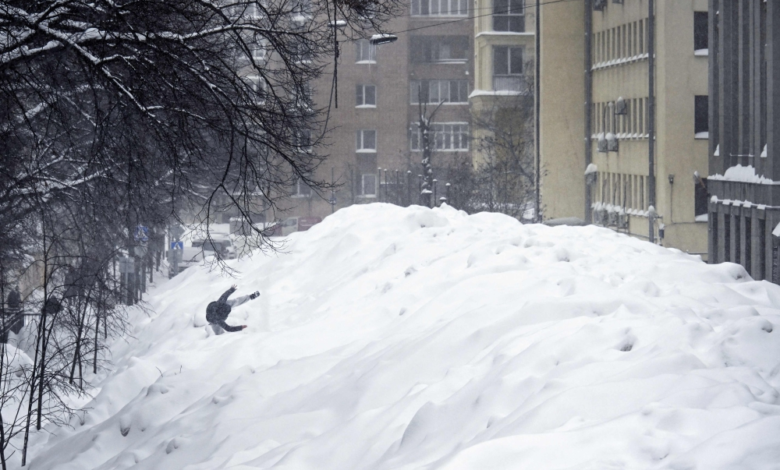

The Russian capital, Moscow, is experiencing an exceptional weather pattern not seen in two centuries. Meteorologists at Moscow State University have announced that January has seen the heaviest snowfall in two centuries. This rare weather phenomenon is the result of deep low-pressure systems and widespread storms sweeping across the capital and its surrounding areas, transforming the city into a vast blanket of white.
Record numbers that exceed the limits of the ordinary
According to data released by the university and published on the social networking site VK, January 29th alone saw 92 millimeters of snowfall, an unprecedented figure representing the highest total recorded in the last 203 years. This amount surpassed the previous modern record, set in January 2004, which saw 88.9 millimeters of snowfall.
Reports indicated that the snow accumulation on Moscow's streets exceeded 60 centimeters on Thursday, posing a significant challenge to the infrastructure and transport services in one of the cities most accustomed to extreme cold.
Climate context and the impact of hurricanes
Experts explained that the main reason behind this unusual intensity was the passage of a series of "deep and widespread storms" through the Moscow region. These weather systems not only brought snow but were also accompanied by a drop in temperatures, with recorded temperatures 1.5 degrees Celsius lower than the usual seasonal average for January, which is -6.2 degrees Celsius.
These phenomena are part of severe climate fluctuations that may affect the daily lives of residents, from traffic and public transport to snow removal operations, which require a full mobilization of municipal agencies to deal with these enormous quantities.
Historical overview: A comparison with 1823
Historical records indicate that the last time the capital experienced such heavy rainfall was in 1823, when 122 millimeters of precipitation were recorded. However, scientists are approaching these older figures with caution, stating that "data collected in the distant past may not be entirely reliable" due to the difference between the measuring instruments and meteorological standards of the 19th century and the precise technologies used today.
This climate event underscores the importance of monitoring weather changes and developing monitoring systems, as the recurrence of such extreme phenomena after two centuries reopens the debate about climate cycles and their potential impacts on major cities in the northern hemisphere.