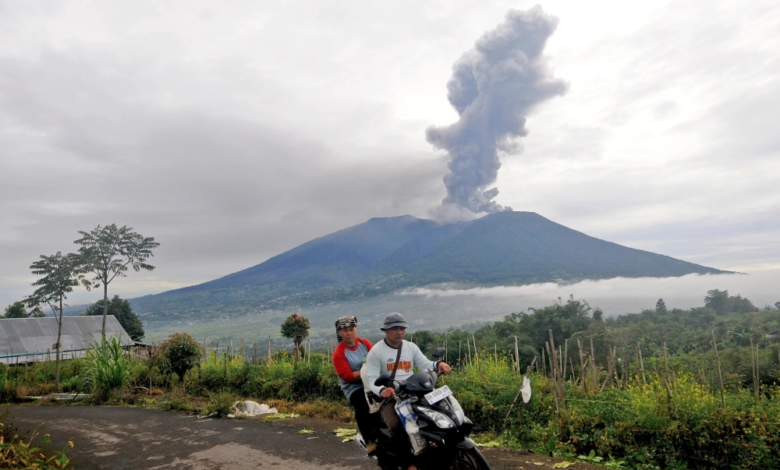
شهدت مقاطعة سومطرة الغربية في جمهورية إندونيسيا حدثاً جيولوجياً جديداً أثار قلق السلطات المحلية والسكان، حيث ثار بركان جبل مارابي مجدداً، مطلقاً عموداً كثيفاً وضخماً من الرماد البركاني وصل ارتفاعه إلى نحو 1600 متر فوق مستوى فوهة البركان. وقد استدعى هذا النشاط البركاني المتزايد استجابة فورية من الجهات المختصة لضمان سلامة المناطق المحيطة.
وفي تفاصيل الرصد التقني للحدث، صرح أحمد رفندي، المسؤول في مركز مراقبة بركان مارابي، بأن أجهزة الرصد سجلت النشاط البركاني في تمام الساعة 9:36 صباحاً بالتوقيت المحلي. وأوضح أن سحب الرماد الكثيفة اتجهت نحو الجهة الشمالية الشرقية، مدفوعة بالرياح، بينما أظهرت بيانات أجهزة قياس الزلازل أن الثوران استمر لمدة 31 ثانية، مسجلاً سعة قصوى بلغت 28.6 مليمتر، مما يشير إلى ضغط داخلي كبير دفع بهذه المواد البركانية إلى الخارج.
واستجابة لهذا الوضع، قررت السلطات الإندونيسية الإبقاء على مستوى التأهب عند "الدرجة الثانية" (Waspada)، وهو مستوى يتطلب يقظة عالية. وأصدرت توجيهات صارمة وتحذيرات مشددة للسكان المحليين والسياح والزوار بضرورة الامتناع التام عن الاقتراب من المنطقة المحظورة، والتي تم تحديدها بنطاق دائري نصف قطره 3 كيلومترات من مركز النشاط البركاني، وذلك تجنباً للمخاطر المحتملة من المقذوفات الصخرية أو الغازات السامة.
ويأتي هذا الحدث في سياق الموقع الجغرافي الفريد لإندونيسيا، التي تقع ضمن ما يُعرف بـ "حزام النار" في المحيط الهادئ. وتعد هذه المنطقة واحدة من أكثر مناطق العالم نشاطاً من الناحية الزلزالية والبركانية، حيث تلتقي عدة صفائح تكتونية قارية ومحيطية. وتضم إندونيسيا وحدها ما يقرب من 130 بركاناً نشطاً، مما يجعلها عرضة بشكل مستمر لمثل هذه الظواهر الطبيعية التي تشكل جزءاً من حياة السكان اليومية وتحدياً مستمراً لأجهزة إدارة الكوارث.
ويكتسب جبل مارابي، الذي يعني اسمه "جبل النار" باللغة المحلية، أهمية خاصة وخطورة متميزة كونه البركان الأكثر نشاطاً في جزيرة سومطرة. وللبركان تاريخ طويل من الثورات المفاجئة التي لا تسبقها دائماً مؤشرات زلزالية واضحة، مما يجعل مراقبته أمراً حيوياً. وتؤثر ثورات هذا البركان بشكل مباشر على الاقتصاد المحلي وحياة المزارعين، ورغم خصوبة التربة البركانية التي يجذبها، إلا أن الرماد المتطاير قد يهدد المحاصيل الزراعية وصحة الجهاز التنفسي للسكان في المدى القصير.
وتحذر الجهات الصحية والبيئية دائماً في مثل هذه الحالات من مخاطر الرماد البركاني الدقيق، الذي يمكن أن يتسبب في مشاكل تنفسية حادة، فضلاً عن تأثيره على مدى الرؤية الأفقية وسلامة الطيران في الأجواء القريبة. وتواصل فرق الطوارئ مراقبة الوضع عن كثب، مستعدة لرفع مستوى التحذير أو إجلاء السكان إذا ما أظهرت البيانات الجيولوجية أي تصاعد خطير في النشاط البركاني خلال الساعات أو الأيام المقبلة.