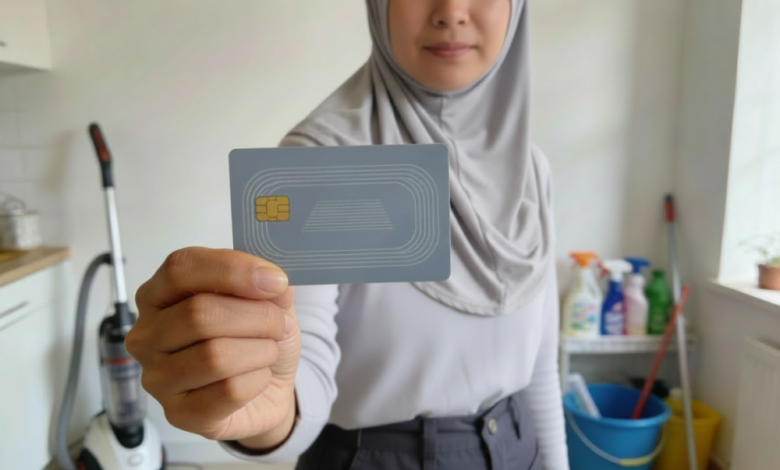

The Ministry of Human Resources and Social Development in Saudi Arabia continues its diligent efforts to regulate the recruitment sector through the "Musaned" platform, which has become the cornerstone of the contractual relationship between employers and domestic workers. These steps are part of the Kingdom's Vision 2030, which aims to automate government services, improve quality of life, and guarantee the rights of all parties in the labor market.
The organizational context and the importance of the Musaned platform
The "Musaned" platform is no longer just a recruitment portal; it has transformed into a comprehensive system for managing the entire lifecycle of domestic workers within the Kingdom. The launch of the "Insurance for New Domestic Worker Contracts" service is a strategic step aimed at mitigating the financial risks previously faced by Saudi families, such as workers absconding or refusing to work shortly after arrival, which resulted in significant financial losses for citizens.
These measures reflect the Kingdom’s commitment to international human rights standards and combating human trafficking, as the system provides a transparent and documented work environment that protects the worker from exploitation by brokers and ensures that the employer receives the service in return for the costs he pays.
Details of mandatory contract insurance service
The mandatory insurance service was implemented starting from February 1, 2024. The Ministry designed this service to be a safety net for both parties to the contract according to the following mechanism:
- For new workers: Insurance is mandatory within the recruitment costs for the first two years from the start of the contract for workers coming for the first time.
- Upon renewal: Insurance becomes optional for the employer after the first two years.
Cases covered by insurance
The insurance policy is comprehensive, guaranteeing financial compensation in multiple cases, thus enhancing the financial and psychological stability of families:
- For the employer: Compensation for recruitment expenses in cases of (absence from work "runaway", refusal to work, death, total or partial disability, or contracting chronic diseases that prevent work). Compensation also includes expenses for repatriating the body and personal belongings in the event of the worker's death.
- For domestic workers: Preserving financial rights in case the employer is unable to pay salaries due to death or permanent disability, in addition to compensating the worker in cases of total or partial disability resulting from accidents.
Salary transfer mechanism and financial inclusion
As part of the Kingdom's efforts to promote digital financial transactions and reduce reliance on cash, the Ministry has implemented a precise mechanism for transferring salaries through approved digital channels within the "Musaned" platform. This step ensures the documentation of wage payments and resolves labor disputes related to financial entitlements.
Salary transfer requirements and steps:
- Create an account for the worker through one of the digital wallets or banks approved on the platform.
- Having a mobile number registered in the worker's name and linked to his residence number to ensure privacy and security.
- Activate the "Domestic Workers Salaries" service through the employer's bank account.
- The transfer process is completed monthly, and the worker's name is specified to document the process immediately in the ministry's system.
Rights and Responsibilities: Domestic Work Charter
To ensure the sustainability of the contractual relationship, the ministry has defined a set of rights and obligations that may not be violated, including:
- Worker's rights: To receive a weekly day off, daily rest hours of no less than 8 consecutive hours, to keep the passport and personal documents, to receive paid sick leave (30 days) based on a medical report, in addition to a round-trip travel ticket upon contract renewal.
- Support services for the worker: The platform allows the worker to view his contract in his native language, and to submit and follow up on complaints without an intermediary, thus promoting transparency and fairness.
In conclusion, these updates represent a qualitative leap that places the Saudi recruitment market among the most organized and secure markets in the region, which contributes to attracting skilled labor and preserving the rights of Saudi families at the same time.