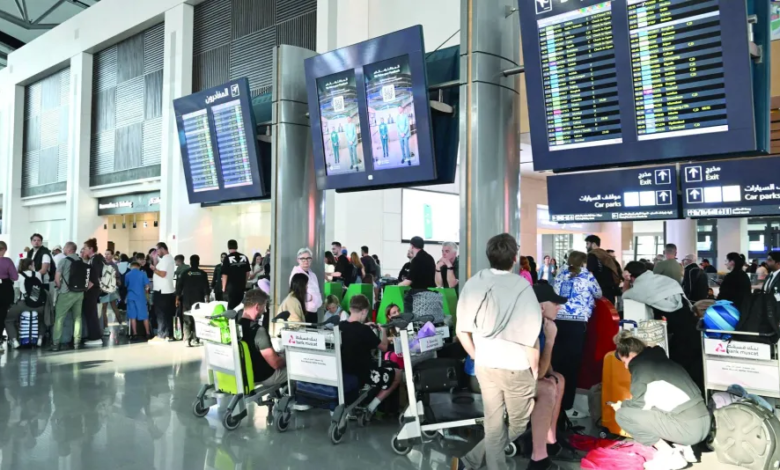
The truth about the reduction of private flights at Muscat Airport: an official clarification

Muscat Airport denies rumors of reducing private flights
Muscat International Airport has categorically denied recent reports and rumors circulating on some media platforms and social media, which suggested a plan to reduce the number of private flights arriving at or departing from the airport. Oman Airports Authority confirmed that private air traffic is operating according to schedule without any changes or new restrictions, emphasizing the airport's commitment to providing the best possible services to all passengers and private aviation users.
General context and importance of Muscat International Airport
Muscat International Airport is the main air gateway to the Sultanate of Oman and has undergone tremendous infrastructure development in recent years. The airport's new terminal has been opened, increasing its capacity to over 20 million passengers annually, with future expansion plans in place. Playing a pivotal role in connecting East and West, the airport boasts state-of-the-art facilities for private and VIP aviation, making it a preferred destination for business travelers and investors from around the world.
The role of private aviation in supporting the Omani economy
The private aviation sector holds significant strategic importance in the Sultanate of Oman, directly contributing to economic and commercial activity. Numerous official delegations, businesspeople, and international investors rely on private flights to reach the Sultanate, conduct business deals, and explore investment opportunities. Furthermore, this sector supports luxury tourism, a cornerstone of Oman's tourism strategy. Any reduction in these flights would have sent a negative message to the market, hence the swift denial, which underscores the stability of the business environment and the continued welcome extended to visitors.
Local and regional impact of official clarification
At the local level, this official denial reassured companies operating in the ground handling and hospitality sectors related to private aviation, whose revenues depend heavily on the continued flow of these flights. Regionally and internationally, Muscat Airport's confirmation of its continued full operations reinforces the Sultanate's position as a safe and stable logistics hub in the Middle East. This stance reflects the Civil Aviation Authority and Oman Airports Company's commitment to complete transparency and effective communication with the public and international partners.
Oman Vision 2040 and the future of the aviation sector
The development of the aviation sector is aligned with the goals of Oman Vision 2040, which aims to diversify income sources and reduce reliance on oil. The logistics and air transport sector is considered a promising area on which the Omani government is relying to create new job opportunities and attract foreign direct investment. The Sultanate is continuously updating legislation and streamlining procedures related to both private and commercial aviation to ensure a seamless and safe travel experience that meets the highest international standards set by the International Civil Aviation Organization (ICAO). Accordingly, Muscat International Airport is continuing its expansion plans and attracting more flights, demonstrating a firm commitment to its strategic objectives.