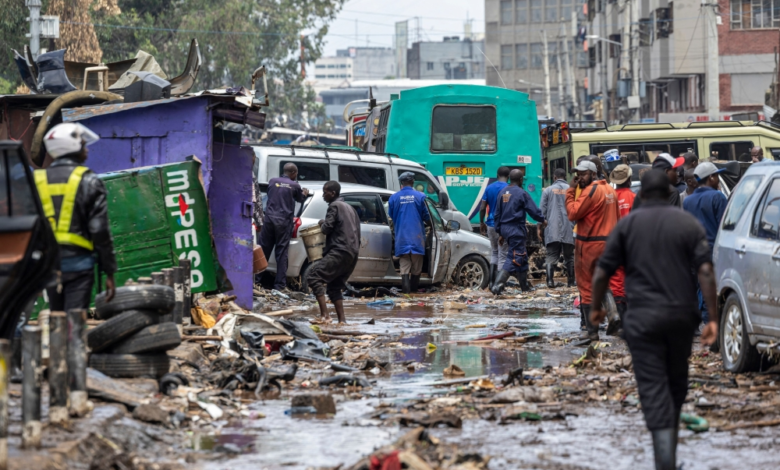

Kenyan authorities announced today a new natural disaster in the capital, Nairobi, as rescue workers recovered bodies from flash floods that swept through parts of the city. The sudden floods have claimed the lives of at least 10 people, an initial toll expected to rise as search and rescue operations continue.
Details of the disaster and material losses
Kenyan police confirmed in an official statement that ten people died as a result of torrential rains that lashed the capital, Nairobi. The damage was not limited to loss of life; it also included widespread property damage, with dozens of cars swept away in the main streets and entire residential areas flooded, trapping many residents in their homes.
Air traffic disruption
Meanwhile, severe weather conditions have impacted the air transport sector, with Kenya Airways announcing widespread disruptions to its flight schedules. The airline explained that heavy rain and poor visibility caused the cancellation of numerous flights arriving at Jomo Kenyatta International Airport in Nairobi, forcing air traffic control to divert several aircraft to Mombasa Airport as a precautionary measure to ensure passenger safety.
Climate context and rainy season in East Africa
This incident comes at a time when East Africa is experiencing extreme weather fluctuations. Kenya is known for two main rainy seasons: the "long rains," which typically last from March to May, and the "short rains" later in the year. However, meteorologists note that rainfall intensity has increased significantly in recent years, a phenomenon scientists attribute to climate change, which has made weather patterns more extreme and less predictable.
Infrastructure challenges in Nairobi
These floods have brought to light the infrastructure challenges in Kenya's capital, Nairobi, where the densely populated city faces significant drainage problems. Rapid urbanization, often outpacing the development of necessary infrastructure, exacerbates the effects of heavy rains, as the water has no outlet, turning streets into raging rivers within hours. These incidents serve as a constant reminder of the need for improved urban planning to mitigate the impact of potential natural disasters.
Economic and social impacts
These floods are expected to have immediate economic repercussions, including disruption to trade and business within the capital, as well as the costs of repairing damaged infrastructure and compensating those affected. The events also raise health concerns regarding the potential spread of waterborne diseases in the flooded areas, necessitating a rapid response from health and humanitarian organizations to contain the situation.