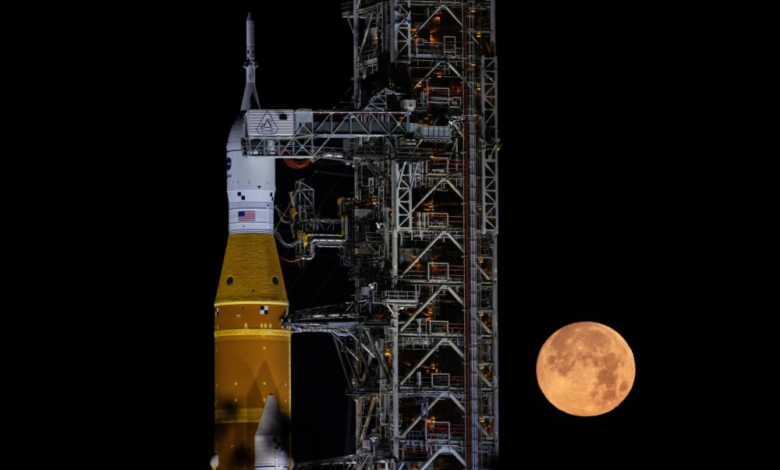
NASA has announced a new technical hurdle that could delay the launch of the Artemis 2 mission, the highly anticipated mission to return astronauts to the lunar orbit for the first time in over 50 years. The agency explained that the new, giant rocket designed for the mission, known as the Space Launch System (SLS), is experiencing a problem with the flow of helium to its upper stage, making a postponement of the launch until next spring almost certain.
In detailing the technical problem, NASA engineering teams indicated that the flow of helium, a vital component for engine purging and fuel tank pressurization, unexpectedly ceased. The agency confirmed that this issue is entirely separate from the liquid hydrogen leak challenges it previously encountered, which caused the cancellation and repetition of countdown tests. Teams are currently reviewing precise technical data to determine whether repairs can be carried out while the rocket is on the launch pad, or if the 98-meter-long rocket will need to be returned to the VAB (Vehicle Maintenance Aircraft) hangar.
These developments come at a significant historical juncture, as humanity seeks to revive the glory of deep space exploration, which ceased after the end of the iconic Apollo program. Since the Apollo 17 mission in December 1972, humans have not ventured beyond low Earth orbit. The Artemis 2 mission is a cornerstone of this new program, designed to carry a crewed mission to orbit the Moon and return, paving the way for the Artemis 3 mission, which aims to land on the lunar surface and establish a sustainable human presence there.
The significance of this event extends far beyond the purely technical realm, encompassing broad strategic and scientific dimensions. Internationally, the Artemis program represents an attempt to reaffirm American leadership in space amidst escalating global competition. Furthermore, the success of this mission is a crucial and inevitable step toward humanity's ultimate goal: sending crewed missions to Mars in the near future. Any delays to the Artemis II timeline will inevitably impact the entire space exploration agenda for the coming years, placing additional pressure on NASA to ensure the highest standards of safety and reliability before risking the lives of astronauts.