European energy markets witnessed a dramatic shift during trading today, with natural gas futures prices recording a significant jump, driven by a wave of anxiety that swept global markets as a result of escalating geopolitical tensions in the Middle East region.
In trading details, natural gas futures on the Dutch TTF – the main benchmark for gas prices in Europe – for April delivery soared by a record 47.7%, reaching €47.2 per megawatt-hour by 3:38 PM Mecca time. This sharp rise reflects the markets' extreme sensitivity to any threat to global supply chains.
Supply disruptions and the impact of the Strait of Hormuz
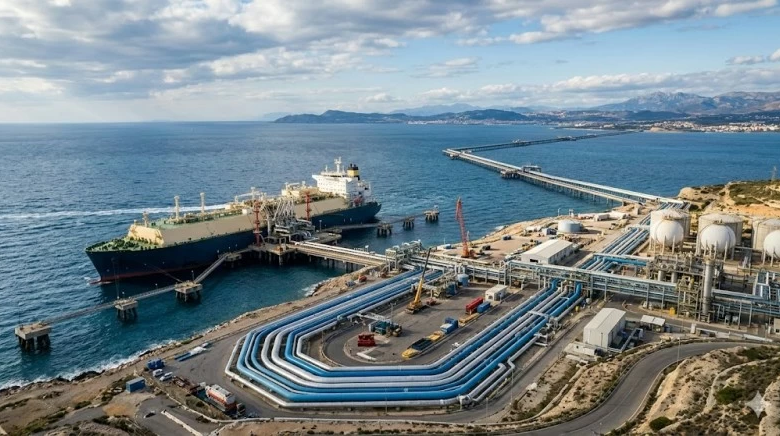
This sharp rise in prices was a direct reaction to announcements regarding shipping disruptions, specifically after Qatar Energy announced a temporary suspension of liquefied natural gas (LNG) and related product production. This move is of paramount importance given that Qatar is one of the world's largest LNG exporters, and the European market is increasingly reliant on its shipments to compensate for the shortfall in Russian gas supplies.
This comment is closely linked to the military escalation that halted shipping through the Strait of Hormuz over the weekend. The Strait of Hormuz is a vital artery for the global economy, with nearly 20% of the world's liquefied natural gas trade passing through it, and any disruption to this waterway raises immediate concerns about energy security in Europe.
Economic context and historical background
To understand the depth of the current crisis, one must consider the broader context Europe has been experiencing since 2022. After reducing its reliance on Russian pipeline gas, European countries strategically shifted towards liquefied natural gas (LNG) delivered by sea, making domestic energy prices more vulnerable to global fluctuations and disruptions in international shipping lanes. While Europe has successfully developed the infrastructure to receive LNG, price stability remains contingent on uninterrupted flows.
European reassurances amid concerns
In an attempt to calm market anxieties and curb price volatility, a European Commission spokesperson was quick to emphasize the EU's strong position. The spokesperson explained that the EU's gas imports are well-diversified, noting that storage levels in European reservoirs remain sufficient and reassuring to meet current demand. However, analysts believe that financial markets often react to "future risks" rather than just the current situation, which explains the significant price increases despite the current ample supply.
Investors and economic decision-makers are watching developments in the Middle East very closely, as a prolonged disruption to navigation or production could have a heavy impact on inflation rates and industrial production costs in Europe in the coming period.