Ports Authority extends exemption for empty containers at King Abdulaziz and Jubail ports

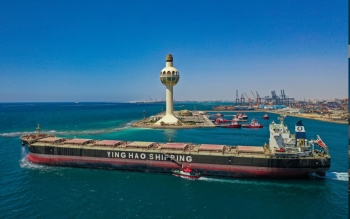
The Saudi Ports Authority (Mawani) launched an initiative on Sunday to extend the exemption period for empty containers arriving through King Abdulaziz Port in Dammam and Jubail Commercial Port. This initiative aims to support the competitiveness of Saudi ports and enhance the efficiency of logistical operations, thereby contributing to the growth of national exports.
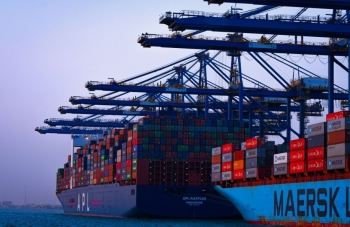
The initiative extends the exemption period for storage fees on imported empty containers from 10 to 20 days at both ports. This will incentivize shipping lines to import and redirect empty containers to ports in the Eastern Province, ensuring a continuous flow of these containers.
The initiative also encourages the redirection of empty containers currently held in ports of other Gulf Cooperation Council (GCC) countries to King Abdulaziz Port in Dammam and Jubail Commercial Port. This will increase the availability of empty containers needed for export operations and support the smooth flow of goods through the ports.
Sulaiman Al-Mazrou, President of the Saudi Ports Authority, explained that the initiative to extend the exemption period for empty containers is a key enabler for incentivizing shipping lines to increase the flow of empty containers to Saudi ports, thus enhancing their availability to meet export needs.
He added that the initiative supports increased operational efficiency and smoother container movement, while also contributing to reduced operational costs associated with container availability. He emphasized that Saudi Ports Authority (Mawani) continues to develop innovative initiatives that enhance the competitiveness of Saudi ports and solidify the Kingdom's position as a regional logistics hub, in line with the objectives of the National Transport and Logistics Strategy.
This initiative is part of ongoing efforts to develop the logistics sector and improve its operational efficiency, thereby strengthening the competitiveness of Saudi ports and supporting the achievement of the National Transport and Logistics Strategy's goals in establishing the Kingdom as a global logistics center.