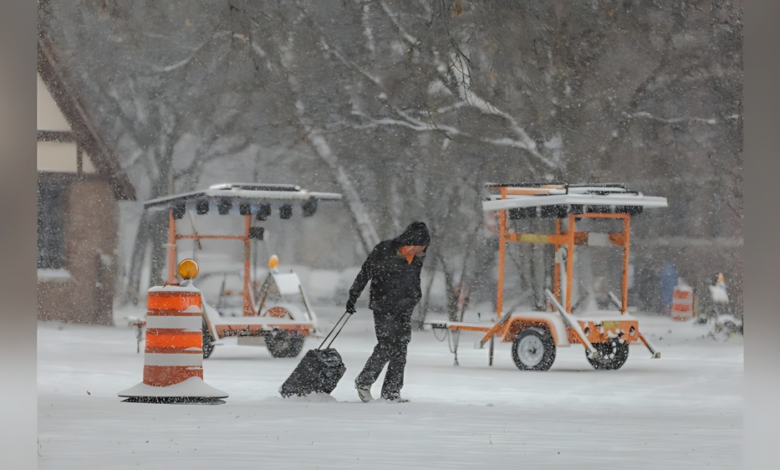
Paralysis in the Netherlands due to snow: trains halted and flights cancelled

On Tuesday, the Netherlands experienced a complete paralysis in the transport and communications sectors, as a severe wave of snowfall and sub-zero temperatures caused a complete halt to train traffic and the cancellation of hundreds of flights, partially isolating the country from its European surroundings and disrupting the daily lives of citizens.
Dutch railways stopped
The Dutch railway company NS announced in an official statement that the rail network would be unable to run any trains until at least 9:00 AM GMT. The company attributed this difficult decision to technical and logistical problems caused by the accumulation of snow and ice on the tracks, which often leads to the freezing of electrical transformers and switches, posing a significant risk to passenger safety and train operations.
Crisis at Schiphol Airport and mass cancellations
The situation in the air was no better than on the ground, as a snowstorm battered Amsterdam's Schiphol Airport, one of the world's busiest and a major gateway to Europe. KLM Royal Dutch Airlines was forced to cancel at least 300 flights scheduled for Tuesday. This comes as part of a series of disruptions that have persisted for the fifth consecutive day, with ground crews struggling to clear ice from aircraft and runways to ensure a minimum level of safe operation.
Regional impacts and importance of Schiphol Airport
This event is particularly significant given Schiphol Airport's strategic location as a major air transport hub in Europe. Flight cancellations at this airport not only affect passengers traveling to and from the Netherlands, but also thousands of transit passengers who rely on the airport as a connecting link between continents. Such disruptions at major transport hubs typically have a domino effect, causing delays and cancellations at other airports worldwide.
Climate challenges and infrastructure
Despite the Netherlands' well-developed infrastructure, the high density of its transport network makes it extremely vulnerable to severe weather conditions. Historically, Dutch railways have faced frequent challenges during the winter months. The busy train network demands strict punctuality, and even minor disruptions due to ice can lead to train congestion and service disruptions lasting for hours. These conditions often prompt authorities to issue warnings urging citizens to stay home and work remotely to alleviate pressure on road networks and public transport, which are already struggling with slippery conditions and heavy traffic congestion.
Emergency teams are currently working at full capacity in an attempt to restore normalcy, while awaiting improved weather conditions to enable the gradual resumption of flights and train operations.