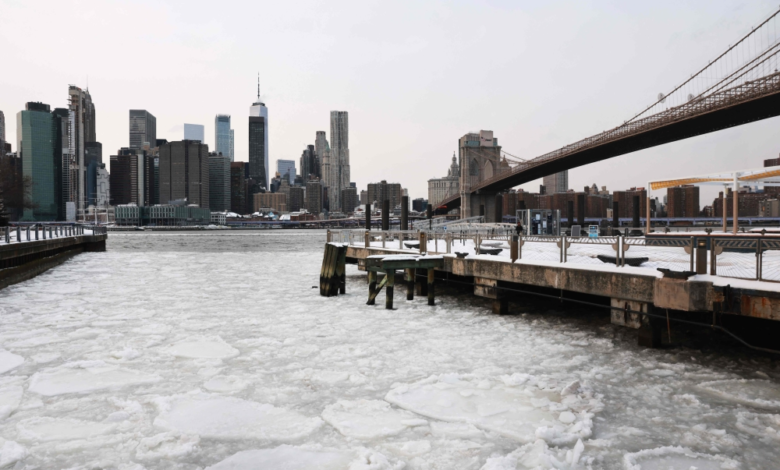

New York City and the East Coast of the United States experienced an extraordinary weather phenomenon as a severe cold wave and polar vortex caused parts of the East River along the Brooklyn shoreline to freeze over. The city was blanketed in white after the intense winter storm that struck the region over the weekend, transforming iconic landmarks into icy sculptures in a scene that was both beautiful and awe-inspiring.
Storm details and human losses
Official reports indicated that snow accumulated to a depth of over a foot (approximately 30 cm) in large parts of the city and neighboring states. The storm's impact extended beyond the natural landscape, leaving behind a human tragedy with at least 35 deaths across the country. The causes of death varied, including traffic accidents caused by vehicles skidding, direct exposure to extremely low temperatures leading to freezing, accidents related to unsafe heating methods, and power outages.
A cascade of crises in the transport sector
The severe weather conditions brought transportation to a near standstill. FlightAware, a website specializing in tracking air traffic, reported the cancellation of more than 19,000 flights since the storm began, with thousands more delayed. Operations at major airports that serve as vital hubs for the East Coast, such as New York's John F. Kennedy and LaGuardia airports, as well as those in Washington and Philadelphia, were almost entirely halted, leaving thousands of passengers stranded and disrupting global flight schedules.
Climate context and storm impact
Meteorologists classify this storm as one of the worst to hit the United States in recent decades. This phenomenon is often caused by a disturbance in the polar vortex, allowing frigid air to descend southward from the Arctic and blanket large areas of North America. These sharp drops in temperature cause water bodies like rivers to freeze, a rare event that underscores the severity of the cold.
Ongoing warnings and existing risks
For its part, the National Meteorological Agency and local authorities renewed their warnings to citizens about the continued risk of frost and the formation of deadly "black ice" on roads. They also warned that the perceived temperature could reach dangerously low levels, posing a threat to life if exposed for extended periods. They urged residents to stay indoors and only go out when absolutely necessary, and to ensure the safety of their heating appliances to avoid carbon monoxide poisoning.