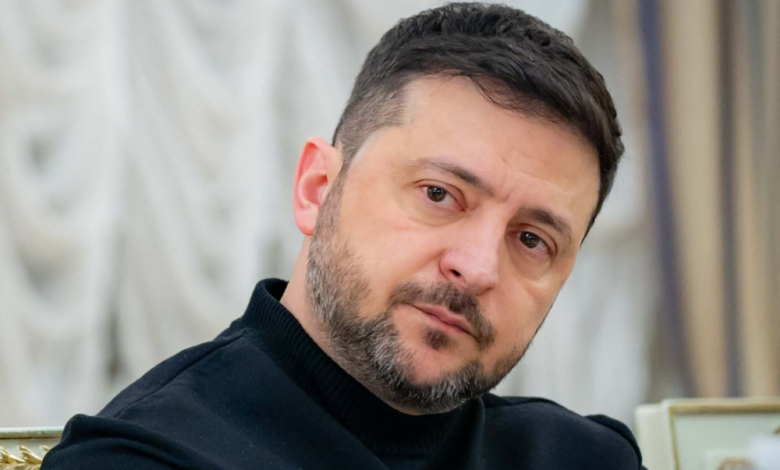

Ukrainian President Volodymyr Zelenskyy affirmed that recent moves to de-escalate tensions with Russia are a pivotal and essential step in building trust between the two sides, noting that diplomacy remains the best option to prevent the escalation of conflicts in the region. This statement comes at a time when international attention is focused on Europe's eastern borders, where geopolitical tensions continue to be a major concern for the international community.
Context of the conflict and historical background
Zelensky's statements cannot be understood in isolation from the complex historical context of Russian-Ukrainian relations, particularly since the outbreak of the crisis in 2014. The region has witnessed sharp fluctuations, punctuated by periods of military escalation and cautious calm. The Minsk agreements and the Normandy Format talks (involving France, Germany, Russia, and Ukraine) represent some of the most prominent diplomatic efforts over the years to find common ground for a political solution. However, the lack of mutual trust has consistently been the biggest obstacle to the full implementation of these agreements.
The importance of de-escalation and its regional impact
Talk of “confidence-building” carries profound strategic implications. De-escalation doesn't simply mean halting military operations or withdrawing forces; it also opens the door to addressing urgent humanitarian issues. Any relative calm is expected to facilitate prisoner exchanges, the opening of humanitarian corridors, and the securing of residential areas that have long suffered the ravages of conflict. Regionally, stable relations between Kyiv and Moscow are crucial for European energy security, given Ukraine's strategic location as a transit country for gas pipelines, making any diplomatic breakthrough good news for European markets.
International situation and future prospects
Internationally, Western allies, led by the United States and the European Union, are watching these developments with both caution and hope. While any step toward de-escalation is welcomed, the international community continues to emphasize that these steps must be concrete and sustainable, not merely tactical maneuvers. Zelensky's statement reflects Kyiv's desire to seize any opportunity for peace, while reaffirming its territorial sovereignty. This places the onus on international diplomacy to strengthen this path and prevent a return to square one of tensions.