The Noor system activates waiting lists to accommodate the pressure of student results

The Saudi Ministry of Education activated the "virtual waiting lists" feature on its central "Noor" system on Thursday, as a proactive technical measure to manage the massive influx of digital traffic to the platform following the announcement of first-semester results. This step aims to ensure service continuity and prevent any sudden server outages that could hinder parents and students from accessing their academic data.
Record numbers and high density
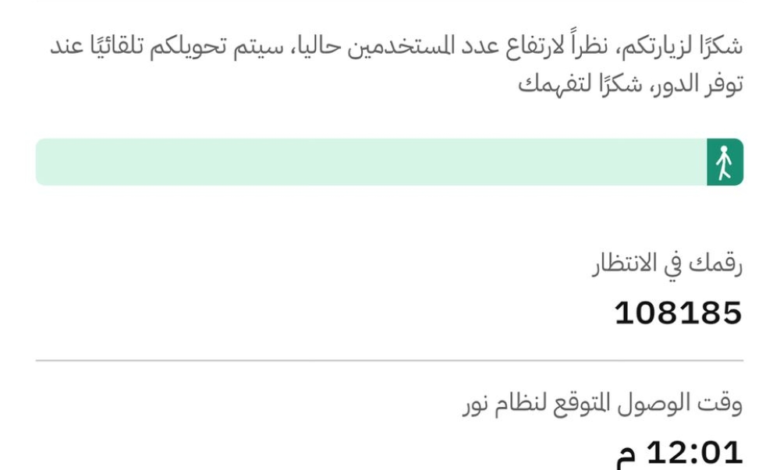
The system's technical indicators revealed exceptional login numbers, with the number of users online simultaneously exceeding 108,000. This prompted the system to automatically intervene to manage the login process. Users received an alert message informing them that they were placed in a temporary waiting list, with a precise estimate of their expected access time, which, according to the monitored data, ranged from 10 to 15 minutes. This situation reflects the high level of interest and anticipation surrounding the academic results.
Noor System: A Pillar of Digital Transformation in Education
To understand the context of this immense pressure, one must consider the Noor system, one of the largest electronic educational systems in the Middle East. Since its launch, the system has represented a qualitative leap in the history of Saudi education, eliminating traditional paper-based transactions and connecting all schools across the Kingdom to a unified central network. The system is the cornerstone upon which more than six million students, along with teachers and parents, rely to manage all educational processes, from registration and transfers to grade recording and certificate issuance, making it an indispensable and vital component of the educational system.
Smart management of technological crises
The activation of "queuing lists" reflects the maturity of the ministry's digital infrastructure. In previous years, government websites suffered complete crashes at peak usage. Today, the use of load balancing and queuing technologies ensures equitable access, allowing users already within the system to browse results smoothly and quickly, while others wait their turn in an organized queue. This maintains the stability of the online portal and prevents it from collapsing under the weight of simultaneous requests.
Widespread impact and societal anticipation
This technical procedure coincides with the uploading and approval of results by public schools across all regions and governorates, creating a state of digital mobilization among Saudi families eager to check their children's academic performance. These measures underscore the Ministry's commitment to providing a reliable user experience, aligning with the goals of the Kingdom's Vision 2030 to enhance e-government and improve the efficiency of digital services offered to citizens and residents.