
Military escalation on the Korean Peninsula
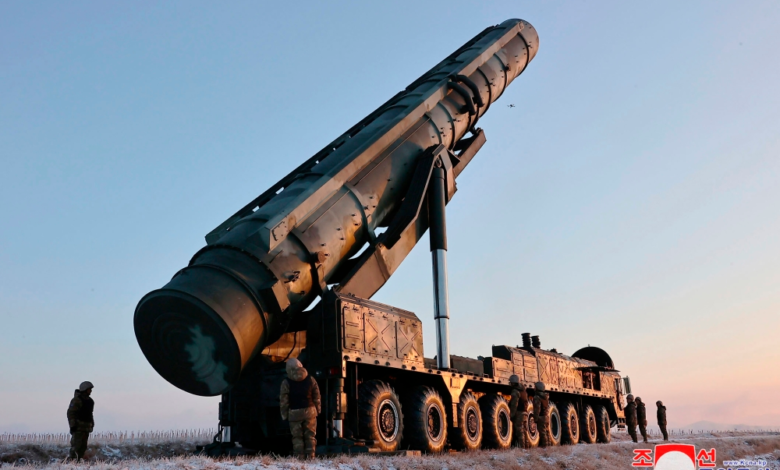
In a new and alarming military escalation on the Korean Peninsula, authorities in Seoul announced that North Korea launched approximately ten short-range ballistic missiles into the Sea of Japan (also known as the East Sea) on Saturday. This dangerous development comes as a direct and angry response from Pyongyang to the start of the annual joint military exercises between the United States and South Korea, which North Korea considers a direct threat to its national security and a blatant provocation.
Details of the missile launch operation
South Korea's Joint Chiefs of Staff issued a statement confirming that its military radar systems detected a ballistic missile launch from the Sunan near the North Korean capital, Pyongyang, at 1:20 PM local time (4:20 AM GMT). Prior to this official announcement, the South Korean Ministry of Defense had reported the launch of at least one unidentified projectile. Separately, Japan's Ministry of Defense confirmed the launch via its official X platform, stating that it had detected a suspected ballistic missile launched from North Korean territory, prompting the activation of standard monitoring protocols.
Joint military exercises and Pyongyang warnings
The main reason behind this escalation is the joint military exercises that began on Monday and will continue until March 19. These massive drills involve some 18,000 South Korean troops, in addition to an undisclosed number of US forces. Pyongyang was quick to express its anger, with Kim Yo-jong, the sister of North Korean leader Kim Jong-un and a powerful figure in the regime, issuing a strongly worded warning last Tuesday. She vowed that these exercises would bring unimaginable and dire consequences, asserting that her country would not stand idly by.
The historical context of US-Korean tensions
Historically, joint US-South Korean military exercises have been a recurring flashpoint. Washington and Seoul consistently maintain that these drills are purely defensive in nature and aimed at maintaining combat readiness. Pyongyang, on the other hand, views them as rehearsals and practical exercises for an invasion of its territory. Since the collapse of the historic summit between North Korean leader Kim Jong Un and former US President Donald Trump in Hanoi in 2019, diplomatic negotiations on denuclearization have stalled, prompting North Korea to accelerate the development of its missile arsenal in clear defiance of UN Security Council resolutions that prohibit it from using ballistic missile technology.
Regional repercussions and diplomatic stagnation
Regionally, these repeated missile tests are increasing tensions among neighboring countries, particularly Japan and South Korea, prompting them to strengthen their security cooperation with the United States. Diplomatically, Pyongyang recently dashed any remaining hopes for rapprochement with Seoul, describing the latest peace efforts as a failed and misleading charade. This launch coincided with statements by South Korean officials during visits to the United States, reflecting the previous US administration's views on the possibility of resuming meetings with the North Korean leader, thus highlighting the continuing complexity of the political and security landscape in East Asia.