Cambodia accuses Thailand of annexing a border village and violating the truce

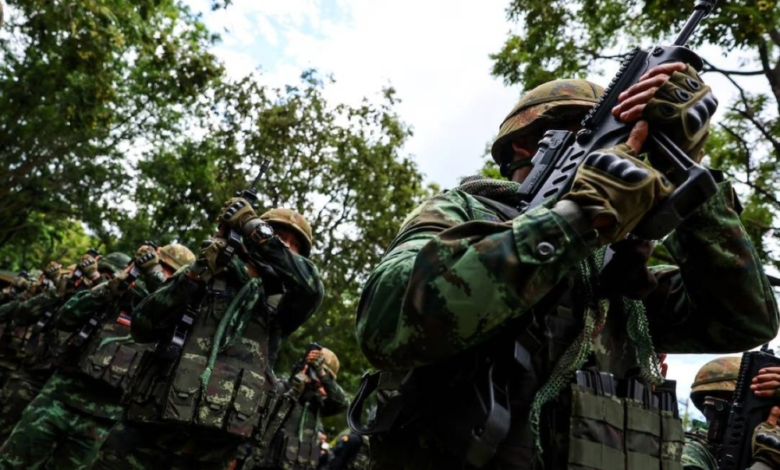
In a striking development that is reigniting tensions in Southeast Asia, the Cambodian government announced on Friday that Thai forces had taken control of a disputed border village, explicitly accusing Bangkok of annexing the area and violating a ceasefire agreement reached to end the bloody fighting along the border between the two countries just a week earlier.
Details of the Cambodian charges
Cambodian Information Minister Neth Phektra stated that the Thai army had begun what he described as an “illegal annexation” of Cambodian territory, specifically in the village of Chuk Che. The minister explained that Thai forces not only encroached on the territory but also damaged civilian buildings and erected barbed wire and shipping containers to create a border wall, in a move aimed at imposing a new reality on the ground.
Viktra added that “Thailand’s unilateral assertion of sovereignty by force was clearly demonstrated by the raising of the Thai flag over the area,” emphasizing that Cambodia would not recognize any border changes resulting from the use of military force. The ministry based its accusations on maps showing a Thai military incursion up to 750 meters into territory that Phnom Penh considers its own.
The Thai narrative: Reclaiming occupied territories
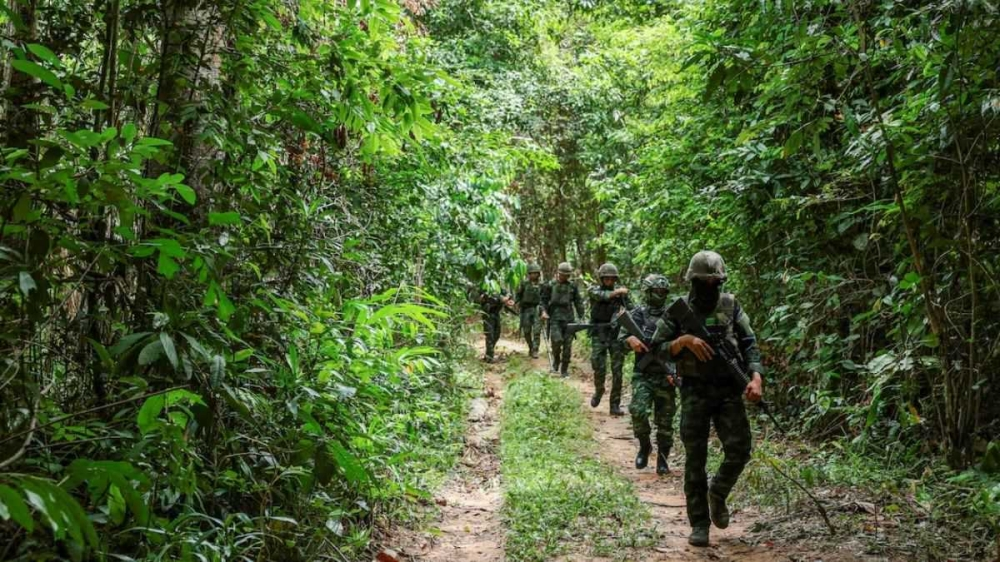
In contrast, the Thai military categorically rejected the Cambodian account. It issued a statement asserting its control over areas it described as "historically Thai," indicating that these lands had been "occupied" by Cambodia through the illegal deployment of troops and settlement of civilians.
The Thai side stressed that its actions did not constitute an invasion, but rather measures to protect national sovereignty, denying media reports that spoke of the use of excessive force to seize territory.
The historical roots of the conflict and its geopolitical background
This dispute is not a recent development, but rather has deep historical roots related to the demarcation of the border during the French colonial era in the early 20th century. The border regions, particularly those surrounding the Preah Vihear temple, have long been a flashpoint between the two neighbors. The International Court of Justice has issued previous rulings (in 1962 and 2013) attempting to clarify sovereignty over some areas, but vast stretches of the 800-kilometer land border remain undefined, leaving the door open for renewed clashes.
Humanitarian and regional repercussions
These developments come after a year of intermittent military clashes, which peaked last December, resulting in dozens of deaths and the displacement of more than a million people on both sides, according to reports. Observers fear that the collapse of the fragile ceasefire agreed upon on December 27 will exacerbate the humanitarian crisis in the region.
Regionally, this conflict poses a significant challenge to the Association of Southeast Asian Nations (ASEAN), which strives to maintain stability and economic cooperation among its members. Further escalation could disrupt intra-ASEAN trade and tourism, and may even necessitate international intervention to try to contain the situation before it spirals out of control.