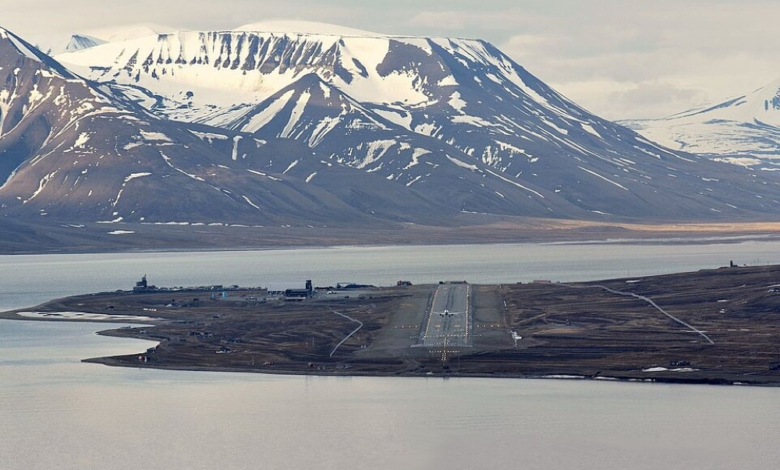

At a time when the world's attention is focused on escalating geopolitical tensions in various regions, a recent report from Norwegian military intelligence has revealed worrying strategic moves in the far north. The report states that both Russia and China are actively seeking to strengthen their military and economic presence in archipelago of Svalbard , a region of vital importance in the international balance of power in the Arctic.
The strategic importance of the Svalbard archipelago
The Svalbard archipelago lies midway between mainland Norway and the Arctic, and is under Norwegian sovereignty by virtue of the 1920 Treaty of Svalbard . This treaty grants signatory states, including Russia and China, equal rights to exploit natural resources, but prohibits the use of the archipelago for war-like purposes. However, the Norwegian intelligence service considers the archipelago's geographic location to make it a crucial strategic asset for Moscow, particularly for securing its northern sea lanes and protecting its Northern Fleet based on the Kola Peninsula.
The annual threat assessment report stated that Moscow considers maintaining a foothold in Svalbard an absolute necessity. This is evident in Barentsburg, the archipelago's second-largest coal-mining town, which is almost entirely populated by Russian citizens. The report indicated strong signs that the Kremlin is working to reduce the town's reliance on Norwegian supply and transport infrastructure, thereby enhancing its logistical independence, coinciding with an increase in the frequency of Russian ship calls to the port.
The rise of Chinese influence and the Polar Silk Road
On the other hand, Norwegian intelligence has not overlooked China's growing ambitions. Beijing, which describes itself as a "near-Arctic state," is working to integrate the region into its ambitious "Polar Silk Road" initiative. The report predicted that China would intensify its activities in Svalbard to solidify its role as a major player in the region.
The Chinese presence has become more visible through research and scientific activities that often have dual-use (civilian and military) dimensions. In 2025, Norway detected the activity of five Chinese research vessels in the Arctic Ocean, compared to three in 2024 and only one in previous years, reflecting a marked acceleration in Chinese interest in the resource-rich region and the new shipping lanes opened up by melting ice.
The fracturing of the global order and the impact of Western tensions
The report did not overlook the broader international context, noting that tensions between the United States and Europe, particularly the Greenland and President Donald Trump's previously stated desire to purchase it, could benefit NATO's strategic rivals. The report argued that divisions within the Atlantic Alliance could provide Russia and China with opportunities to expand their influence.
At a press conference, the head of Norway's intelligence service, Andreas Stensons, stated that "many of the foundations of Norwegian security are facing unprecedented challenges," adding in a cautionary tone, "We must accept the reality that the world order as we have known it is crumbling." He emphasized that Beijing and Moscow view the cracks in Western unity as a golden opportunity to secure their control over neighboring regions and bolster their geopolitical influence.
For his part, Norwegian Defense Minister Tore Sandvik described the current situation as "very uncertain," noting that transatlantic relations have become more volatile, putting Norway – a NATO member that shares a land border with Russia – in a delicate position that requires constant vigilance.