
A recent international report has revealed horrifying facts about the ongoing legacy of nuclear weapons testing, indicating that these explosions were not merely fleeting historical events, but rather an ongoing environmental and health catastrophe affecting every person on Earth. According to the report, published by the Norwegian People's Aid (NPA), these tests have caused the deaths of at least four million people from cancer and chronic radiation-related illnesses.
A history of destruction: 2,400 nuclear tests
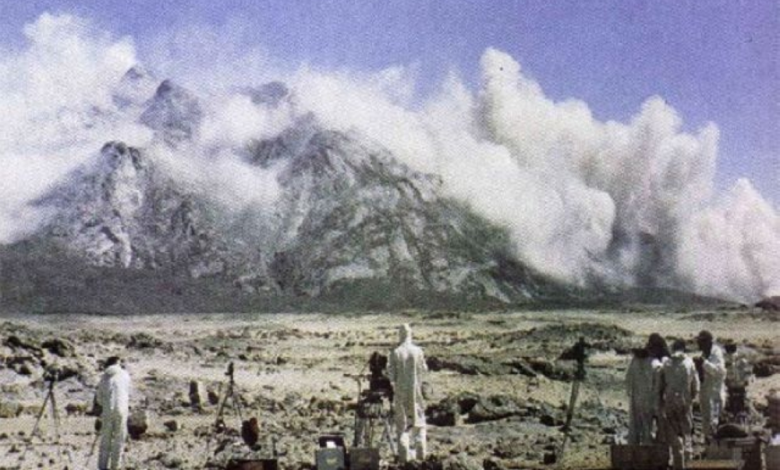
Between 1945 and 2017, the world witnessed more than 2,400 nuclear tests. This dark era began with the arms race during the Cold War, as superpowers competed to develop their arsenals. The list of countries possessing nuclear weapons and known to have conducted tests includes: the United States, Russia (formerly the Soviet Union), China, France, the United Kingdom, Pakistan, India, Israel, and North Korea. While most countries have ceased atmospheric testing, Pyongyang has continued its tests since the 1990s, renewing global concerns.
Health effects: Toxins in bones and DNA
The report revealed that the damage caused by radiation far exceeded previous estimates. Magdalena Stawowski, a professor of anthropology at the University of South Carolina, pointed to the shocking fact that "every human being alive today carries radioactive isotopes from nuclear tests in their bones." Scientific evidence confirms a strong link between radiation exposure and DNA damage, leading to genetic mutations, heart disease, and various types of cancer.
Experts predict that the atmospheric tests conducted up to 1980 will eventually cause an additional two million deaths from cancer, as well as a similar number of premature deaths from heart attacks and strokes, since ionizing radiation is considered biologically harmful to an unacceptable degree, especially to women and children.
Survivors' stories: Testimonies from the heart of the disaster
Communities near test sites still suffer from high rates of birth defects and cancers. Tahitian parliamentarian Hinamuera Cross recounts her harrowing experience of being seven years old when France conducted its last nuclear test in French Polynesia in 1996. "They poisoned us," Cross says, referring to her own diagnosis of leukemia years later, joining a long list of family members who have suffered from thyroid cancer.
In a related context, the report highlights the tragedy of Castle Bravo, the 1954 American bombing of the Marshall Islands, which was a thousand times more powerful than the Hiroshima bomb. The explosion vaporized an entire island, and radioactive dust, which children mistook for snow, fell, causing immediate and long-term burns and radiation sickness among the population.
Lack of transparency and international accountability
The report strongly criticizes the culture of secrecy practiced by nuclear states. In Algeria, the locations of French radioactive waste burial sites remain unknown, and in Kiribati, British and American studies on the health effects remain classified. Raymond Johannes, head of the Norwegian organization, asserts that "past nuclear tests are still killing today," calling for nuclear states to assume their responsibilities in cleaning up contaminated environments and fairly compensating victims, rather than offering limited compensation programs that merely aim to mitigate legal liability.