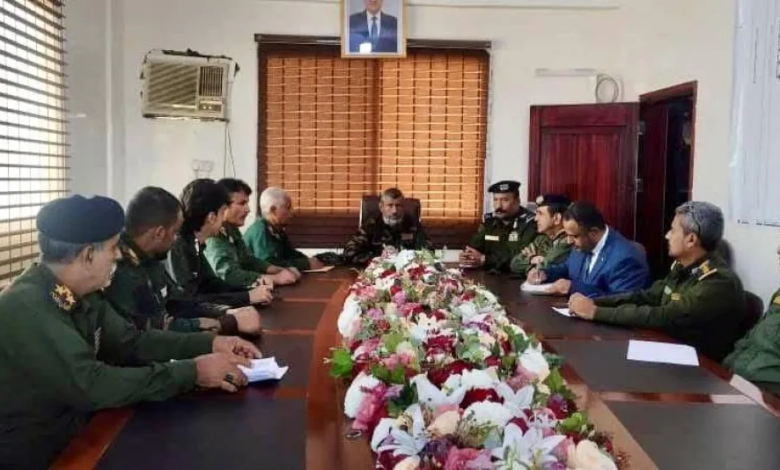
Yemeni measures to unify security formations and strengthen decision-making

Introduction to the unification of security formations in Yemen
The Yemeni arena is witnessing rapid developments within the framework of efforts to restore state institutions, with Yemeni measures to unify security formations and strengthen administrative decision-making at the forefront of the political and security landscape. The internationally recognized Yemeni government, led by the Presidential Leadership Council, seeks to integrate all military and security factions and formations under the umbrella of the Ministries of Interior and Defense. This strategic step aims to end the state of division, unify efforts to confront current challenges, and build national security institutions capable of enforcing the rule of law and protecting citizens in the interim capital, Aden, and the liberated governorates.
General context and historical background of the event
Since the outbreak of armed conflict in Yemen in late 2014, the country has witnessed the emergence of numerous diverse security and military formations that contributed to the liberation of many areas. However, the multiplicity of loyalties and leaderships among these groups led to security and administrative complexities. In April 2022, the Yemeni Presidential Leadership Council was formed, headed by Dr. Rashad al-Alimi. One of its most prominent tasks, as stipulated in the declaration transferring power, was to establish a joint security and military committee. This committee was tasked with restructuring and unifying the armed forces and security services under a single national command, to ensure the avoidance of overlapping jurisdictions and to enhance the efficiency of security agencies in carrying out their duties.
The importance of unifying security formations and strengthening administrative decision-making
These measures are of paramount importance on several levels, as unifying security and military decision-making is the cornerstone of any successful political or administrative process in Yemen. By integrating these forces, the government can bolster its revenues, streamline financial disbursement channels, and strengthen oversight and accountability mechanisms. Furthermore, consolidating administrative decision-making prevents duplication in directives, facilitating the delivery of essential services to citizens and creating an attractive environment for local and international investments, which have been severely impacted by years of war.
Expected impact: locally, regionally, and internationally
Local impact
Domestically, unifying the security forces will lead to significant stability in the liberated governorates and reduce security breaches and inter-factional clashes. This stability will positively impact the lives of Yemeni citizens, facilitating internal trade, ensuring the protection of public and private property, and strengthening public trust in state institutions and their ability to provide security and services.
Regional impact
Regionally, these steps enjoy strong support from the Saudi-led coalition supporting the legitimate government in Yemen, which includes the United Arab Emirates. Unifying Yemeni forces enhances the security of the Arabian Peninsula, forms a strong bulwark against foreign interference aimed at destabilizing the region, and contributes to securing shared borders and combating smuggling and organized crime.
International influence
At the international level, building a unified and strong Yemeni security institution is a vital requirement for the international community to ensure the security of maritime navigation in the Red Sea and the Bab al-Mandab Strait, strategic waterways for global trade. Furthermore, these measures enhance Yemen's capacity to combat terrorism and extremist organizations, and support UN efforts to reach a comprehensive and sustainable political settlement to the Yemeni crisis.
a summary
In conclusion, the Yemeni measures to unify security forces and strengthen administrative decision-making represent a pivotal step in modern Yemeni history. The success of these efforts requires the cooperation of all political and social groups, as well as continued regional and international support, to ensure Yemen's transition from conflict and division to a phase of state-building and the establishment of robust national institutions.