
Global oil prices experienced a sharp and unexpected decline of nearly 5% during trading today, heading towards their biggest daily loss in over six months. This significant drop came as a direct response to rapidly evolving geopolitical developments, specifically statements made by US President Donald Trump earlier this week, revealing serious talks between Washington and Tehran. These statements had offered reassurance to markets regarding the possibility of de-escalation in the oil-rich Middle East region.
Details of the price drop
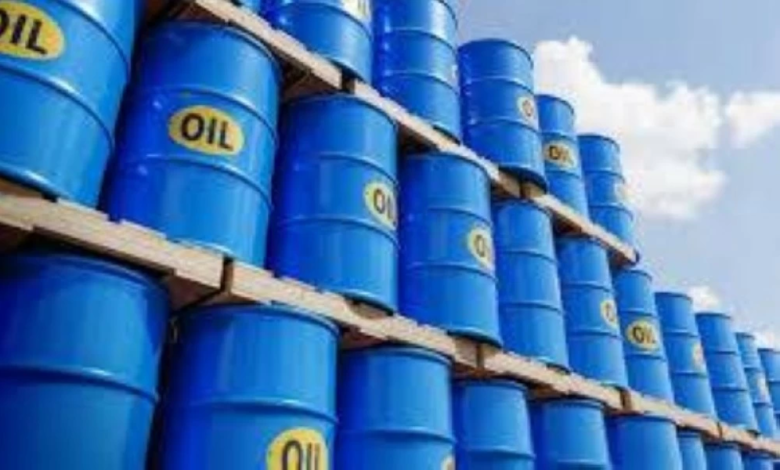
In numerical terms, Brent crude futures fell by $3.30, or 4.8%, to settle at $66.02 a barrel. Similarly, West Texas Intermediate (WTI) crude futures dropped by $3.23, or 5%, to $61.98 a barrel. These price movements reflect the extreme sensitivity of energy markets to political news, particularly Trump's statement: "I hope they negotiate something acceptable. A satisfactory agreement can be reached without nuclear weapons," which investors interpreted as a strong indication that the threat of war was receding.
The geopolitical context and the importance of the Strait of Hormuz
To understand the depth of this impact, one must consider the historical and geographical context of the conflict. The Strait of Hormuz is the most vital artery for global oil supplies, through which roughly one-fifth of the world's oil consumption passes. Tensions in this waterway have long been a major driver of price spikes due to what is known as the "risk premium." In this context, market analyst Tony Sycamore noted that reports indicating the Iranian Revolutionary Guard Corps Navy does not intend to conduct live-fire exercises in the Strait are a tangible sign of de-escalation. Sycamore added, "The crude market sees this as an encouraging retreat from confrontation, reducing the geopolitical risk premium that fueled last week's surge and triggering a broad wave of profit-taking.".
The impact of a strong dollar on the markets
Beyond politics, economic factors played a pivotal role in the downward pressure on prices. Priyanka Sachdeva, an oil market analyst, explained that ongoing threats were the primary support for prices throughout January. She added, "The most recent decline was further exacerbated by the strengthening US dollar, which makes dollar-denominated oil more expensive for buyers using other currencies, thus reducing demand and increasing downward pressure on prices." The inverse relationship between the dollar and commodities is a well-established principle of macroeconomics; a stronger US currency typically restrains commodity prices.
Expected effects
This decline carries mixed effects. For energy-consuming nations, lower prices present an opportunity to alleviate inflationary pressures and reduce production and transportation costs. For producing nations, however, this drop may necessitate a review of production plans within OPEC and its allies to maintain market balance. The current situation underscores that oil markets remain hostage to political tensions and major economic indicators, where a single statement or economic indicator can shift the balance in a matter of hours.