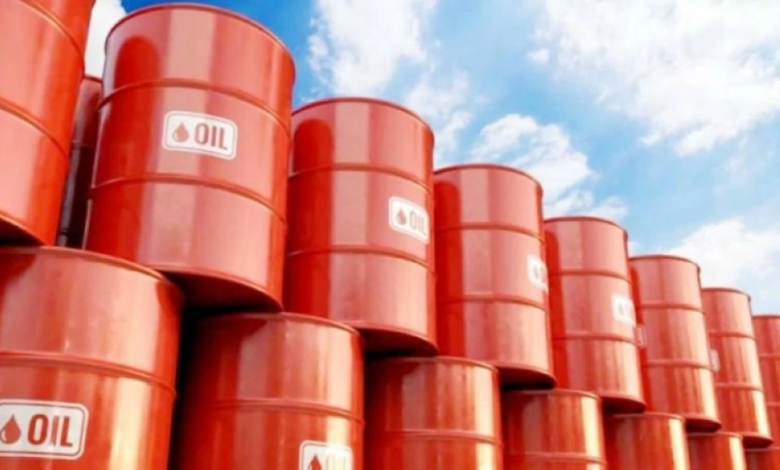
Oil prices fell after an agreement was reached to deliver Venezuelan crude to the United States

Global oil markets witnessed a significant decline in trading today, influenced by statements from US President Donald Trump revealing new developments in the energy file with Venezuela. The statements indicated an agreement for Caracas to deliver between 30 and 50 million barrels of oil to the United States, a substantial quantity with an estimated market value of approximately $2.8 billion based on current price levels. The US president explained that these shipments would be sold at market price, with the proceeds going to serve the interests of both countries, a move representing a significant shift in the course of events.
Market performance and price details
The news was immediately reflected on trading screens, with Brent crude futures falling 18 cents, or 0.30%, to settle at $60.52 a barrel by 12:10 GMT. Similarly, West Texas Intermediate (WTI) crude futures dropped 32 cents, or 0.56%, to $56.81 a barrel. This decline extends losses from the previous session, where both benchmarks lost more than a dollar, amid investor concerns about a potential global oil supply glut this year.
The economic context and the importance of Venezuelan oil
To fully understand this event, one must consider the strategic importance of Venezuelan oil. Venezuela possesses the world's largest proven oil reserves and is known for its heavy crude production, which is essential for many refineries on the southern coast of the United States to produce diesel and jet fuel. Historically, the United States was the largest buyer of Venezuelan oil before relations soured and economic sanctions were imposed on the Venezuelan state-owned oil company, PDVSA. The resumption of these flows, equivalent to 30 to 50 days of Venezuelan production, represents a significant influx into a market already concerned about oversupply amid slowing global demand.
Oversupply and market challenges
The issue of "oversupply" is currently the primary driver of traders' concerns. With production increasing from outside OPEC, particularly US shale oil, any significant additional pumping, such as the announced Venezuelan shipment, exerts strong downward pressure on prices. Implementing this agreement may require diverting oil tankers originally destined for Asian markets like China, or offloading millions of barrels currently stuck in floating storage facilities, as Venezuela attempts to accelerate exports and avoid further logistical and political complications.
Political dimensions and avoiding escalation
This announcement comes amid heightened geopolitical tensions, with President Trump having demanded that Venezuela open its markets to US energy companies, threatening military intervention if it refused. The economic announcement coincided with reports that US forces had arrested Venezuelan President Nicolás Maduro earlier this week, suggesting that all parties are willing to use economic and oil leverage as a tool to de-escalate the situation or reshape the political and economic landscape to ensure the continued flow of energy and prevent a complete supply collapse that could harm the global economy.