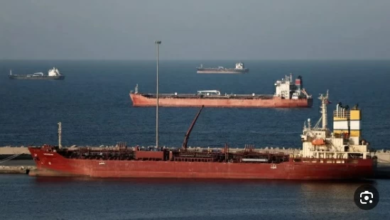

A sharp jump in global oil prices
Oil prices witnessed a sharp and sudden surge in global markets, with Brent crude futures rising by more than $11, nearing the $119 per barrel mark. Meanwhile, West Texas Intermediate (WTI) crude, the US benchmark, climbed by approximately $2.56, or 2.66%, to reach $98.88 per barrel, after gaining more than $3 during the session. This dramatic increase came as a direct and immediate reaction to the Kuwait Petroleum Corporation's announcement that an operational unit at the Mina Al-Ahmadi refinery had been targeted by a drone.
The strategic importance of the Ahmadi refinery
Established in 1949, the Ahmadi refinery is one of the largest and most important refineries in the Middle East and forms the backbone of Kuwait's refining industry. Therefore, any security threat to this vital facility sends waves of anxiety and panic through global energy markets, prompting investors to immediately price in a "geopolitical risk premium" and add it to oil prices.
General context and escalation of the regional shadow war
This dramatic surge in oil prices comes amid an unprecedented escalation of regional tensions in the Middle East. The past few days have witnessed attacks launched by Iran on energy facilities in several regions, following an earlier strike on the South Pars gas field. This development represents a significant escalation in the ongoing "shadow war" between Iran on one side, and the United States and Israel on the other. Historically, Gulf energy facilities have been strategic targets in regional conflicts, most notably the 2019 attacks on Saudi Aramco facilities in Abqaiq and Khurais, which led to a temporary disruption of a large portion of global supplies and a sharp rise in prices.
Widening price gap between Brent and Texas crude
In trading, a significant economic phenomenon emerged: the widening price gap between Brent crude and West Texas Intermediate (WTI) to its largest level in 11 years. Brent crude closed 3.8% higher, while WTI settled unchanged. This wide divergence is attributed to several key factors, most notably the ongoing releases from the US Strategic Petroleum Reserve (SPR), aimed at curbing domestic prices in the United States, as well as the sharp rise in shipping costs. Conversely, Brent crude received direct support from the recent attacks on energy facilities in the Middle East, as it is the most sensitive indicator of geopolitical instability in the region.
Expected impact at the local and international levels
As for the expected impact of this event, it extends to local, regional, and international dimensions. Locally, this attack may prompt Kuwaiti and Gulf authorities to raise security alert levels to maximum around oil installations and increase investments in anti-drone air defense systems. Regionally, this event further complicates the political and security landscape and raises the possibility of wider confrontations that could disrupt navigation in strategic waterways. Internationally, the persistence of oil prices near $120 per barrel threatens to exacerbate global inflation rates, posing significant challenges for major central banks in controlling prices without plunging the global economy into recession, not to mention increasing the financial burden on energy-importing countries and directly impacting global supply chains.