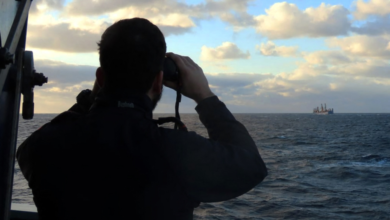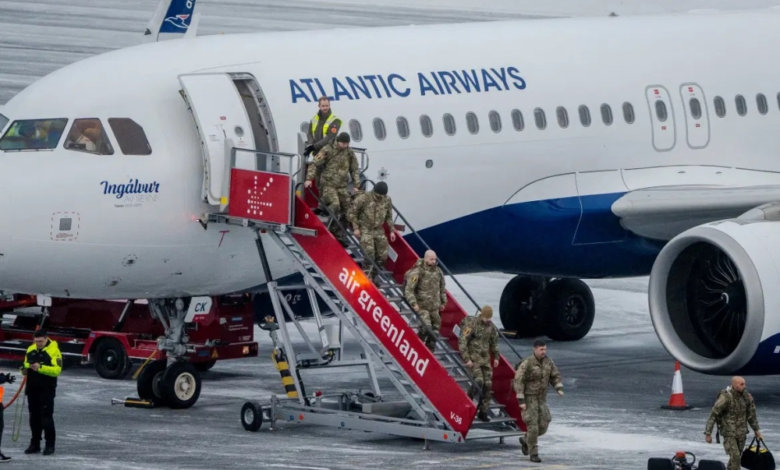

In a notable military move at a sensitive time, the North American Aerospace Defense Command (NORAD) announced the arrival of formations of US and Canadian military aircraft in Greenland .The command confirmed that these movements are part of long-planned and scheduled activities, but they coincide with escalating diplomatic and political controversy surrounding US President Donald Trump's to assert American control over the Danish-ruled island.
Prior military and diplomatic coordination
The US-Canadian Combined Forces Command (CCC) explained in an official statement that this military activity was conducted in full coordination with the Kingdom of Denmark and the local government of Greenland, with all participating forces operating under the necessary diplomatic authorizations. The statement emphasized that the primary objective of these movements is to enhance "the joint defense cooperation between the United States, Canada, and the Kingdom of Denmark," noting that NORAD routinely conducts continuous, spaced-out defensive operations to protect North American and Arctic airspace.
The strategic importance of Greenland
Greenland is gaining increasing strategic and geopolitical importance. It is not merely a massive ice sheet, but a vital gateway to the Arctic and a forward operating base for monitoring sea and air routes between North America, Europe, and Russia. Historically, the island has hosted the U.S. Thule Air Base, a key component of the U.S. missile early warning system. As the ice melts and new shipping lanes open, international competition over the region has intensified, making any military activity there a matter of great interest to global powers.
Tensions escalate following Trump's statements
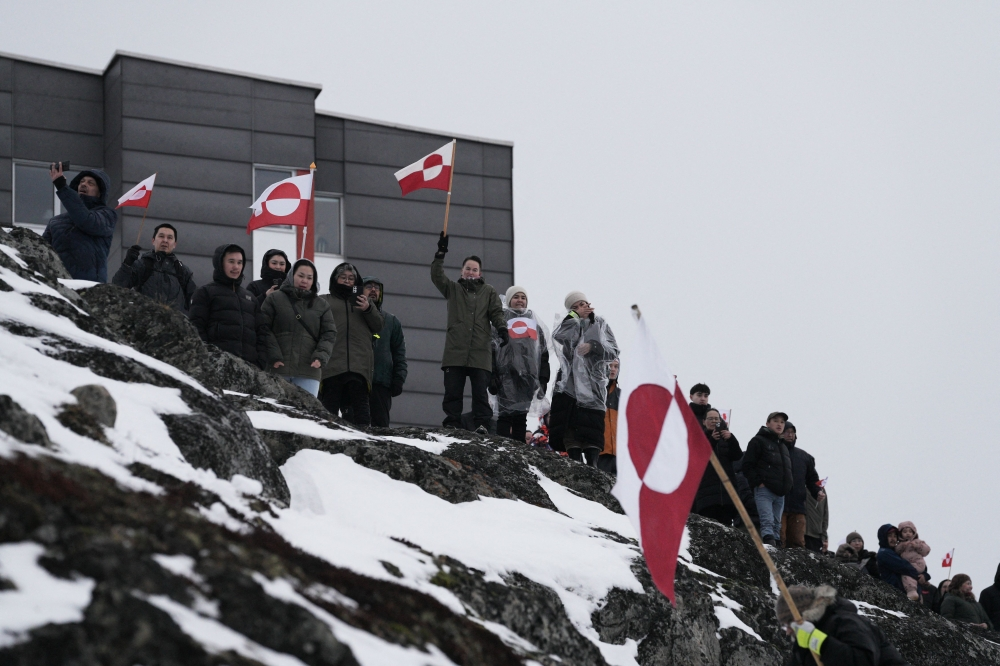
Despite the stated routine nature of the military mission, the political atmosphere appears tense. President Trump alarmed Denmark and its European allies with his repeated assertions that the United States should acquire the island for security and economic reasons. He even went so far as to threaten additional trade tariffs on eight European countries that opposed his position, after those countries sent a symbolic military delegation to the island to demonstrate European solidarity.
Danish and European response
Faced with these pressures, Copenhagen has affirmed that it has taken a series of measures to bolster its sovereignty and military presence in the Arctic and North Atlantic regions. Denmark works in close coordination with NATO member states to ensure the security of the self-governing island. Observers believe that this interplay between military-technical cooperation (through NORAD) and the political dispute over sovereignty reflects the complexities of transatlantic relations under the current US administration, as European countries attempt to maintain their strategic alliance with Washington while categorically rejecting the principle of "buying" sovereign territory.