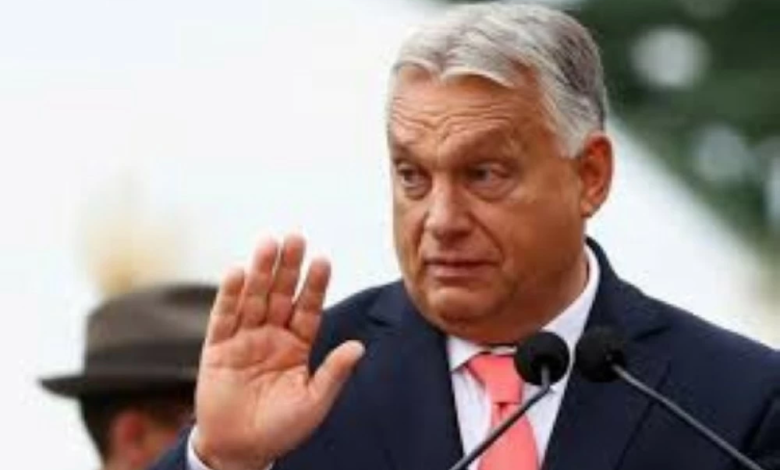
Hungarian Prime Minister Viktor Orbán asserted that the rapid political and military developments in Venezuela will ultimately lead to a more favorable and stable environment in global energy markets in the long term. Orbán's remarks came in response to recent events, including direct US intervention in Caracas.
Dominating global oil reserves
In his analysis of the new economic landscape, Orban explained, “Venezuela and the United States together probably now control roughly 40 to 50 percent of total global oil reserves.” He noted that this forced alliance or new control could have a fundamental and historic impact on global pricing mechanisms, potentially ending an era of extreme volatility caused by Venezuela’s past mismanagement.
Historical background and strategic importance
Venezuela, a founding member of the Organization of the Petroleum Exporting Countries (OPEC), possesses the world's largest proven oil reserves, surpassing even Saudi Arabia. However, its energy sector has suffered for years from deteriorating infrastructure and economic sanctions, drastically reducing its production. Current developments are significant because they could reintroduce substantial quantities of Venezuelan heavy crude to the market under new management, potentially reshaping the global energy landscape.
Market reactions and current volatility
In daily trading, oil prices fluctuated, as the current abundance of global supplies offset initial concerns about supply disruptions. This followed news of the United States' detention of Venezuelan President Nicolás Maduro and his transfer to New York after a swift military operation in his country earlier in the week.
The two benchmark crude oils (Brent and West Texas Intermediate) saw clear fluctuations in early Asian trading, as investors assessed the geopolitical risks in the Latin American country and their immediate impact on supply chains.
The American position and the future of sanctions
For his part, US President Donald Trump stated that Washington is in complete control of the oil-producing country's resources, noting at the same time that the US sanctions and restrictions targeting Venezuelan oil are still fully in effect at the present time, despite the dramatic changes in the power structure and Maduro's transfer to detention in US territory.
Expert analysis: Abundant supply absorbs the shock
With a global market currently characterized by oversupply and excess inventories, economic analysts have downplayed the risk of sudden price spikes. Experts believe that any further disruption to Venezuelan exports will have little immediate impact on prices for the end consumer.
In this context, Kazuhiko Fujii, a researcher at a Japanese economic, business and industrial research institute, said: “The US strikes and operations in Venezuela have not damaged the infrastructure of the oil industry in the South American country, which means it is ready to operate.”.
Fuji added, explaining the Asian markets' perspective: "Even if Venezuelan exports are temporarily disrupted, more than 80% of them were traditionally destined for China. Since Beijing has accumulated ample strategic reserves of crude oil, its search for alternative sources is unlikely to create significant buying pressure on the global market.".