The Pakistani army launches large-scale relief operations to cope with the snow

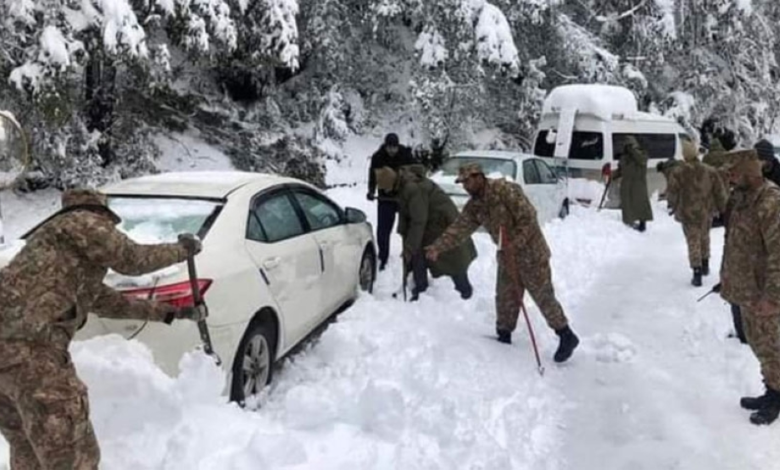
In an immediate response to the severe weather affecting the country, the Pakistani army large-scale relief and rescue operations in several areas of Balochistan and Khyber Pakhtunkhwa provinces. These operations followed a deep low-pressure system that brought heavy snowfall and torrential rain to northern and western Pakistan, paralyzing daily life in the highlands.
Field control centers and evacuation operations
According to official sources, the armed forces quickly established advanced command and control centers in the most affected areas. These centers included strategic locations such as Hosri, Ziarat, Bolan, and Zahab, as well as Qala-e-Saifullah, Khojak Top, Lak Pas, Daki, Kolpur, and Muslim Bagh. These centers serve as operations rooms to coordinate rescue efforts and direct field teams to reach those stranded.
Army units and rescue teams are continuing their tireless efforts to evacuate citizens and tourists trapped by snow in their vehicles or in remote areas, transporting them to safe locations equipped with heating. Alongside the evacuations, food, urgent medical assistance, and other basic necessities are being provided to those rescued to ensure their well-being in the sub-zero temperatures.
Geographical context and climate challenges
These operations are particularly important given the rugged terrain of Balochistan and Khyber Pakhtunkhwa provinces. In winter, these mountainous regions become extremely difficult to traverse, with snow often cutting off the main roads connecting towns and villages. Historically, Pakistan has faced significant challenges in managing winter natural disasters, leading the military to play a pivotal role in supporting civilian authorities, thanks to its heavy machinery and logistical capabilities that enable it to operate in harsh conditions.
Reopening vital arteries
In the strategic Kurm and Tirah Valley regions, heavy rains and snowfall completely disrupted road access, threatening to isolate residents from the outside world. This situation prompted the army to launch immediate emergency operations, deploying bulldozers, heavy machinery, and trained personnel to clear snow and debris from landslides.
Engineering teams successfully reopened and rehabilitated key and damaged roads, a vital achievement that restored the flow of commercial and food supplies and allowed residents to regain access to markets and health centers that had been virtually cut off. Experts emphasize that the rapid response in reopening these roads helps minimize economic losses and prevents humanitarian crises resulting from supply shortages in isolated mountainous areas.