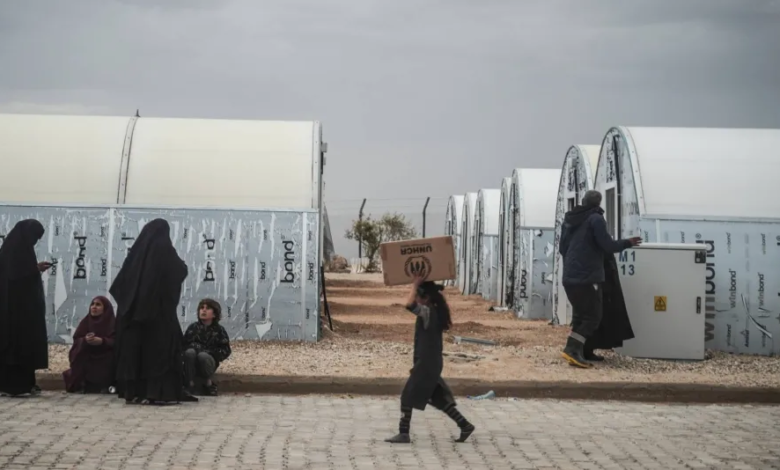
French authorities confirmed in an official statement that the recent escapes from the al-Hol camp in northeastern Syria did not involve any French nationals, as part of their ongoing monitoring of the complex security situation in the camp, which houses thousands of families of Islamic State (ISIS) fighters.
Background of Al-Hol camp: A ticking time bomb in the Middle East
Al-Hol camp, located in Syria’s Hasakah province and run by the US-backed Syrian Democratic Forces (SDF), is one of the largest and most dangerous detention camps in the world. It houses tens of thousands of displaced people, the vast majority of whom are women and children, including families of foreign fighters who joined the extremist group. The United Nations and human rights organizations describe the situation in the camp as “catastrophic” due to the deteriorating humanitarian conditions and the increasing violence and extremism within its walls, making it a fertile ground for the resurgence of extremist ideology.
The French position and the dilemma of repatriating citizens
France is among the European countries most concerned with the al-Hol camp, which houses a large number of French citizens who joined ISIS in previous years. Paris follows a very cautious policy known as a "case-by-case" approach to repatriating its citizens, focusing primarily on bringing back orphaned children or minors whose mothers agree to relinquish them. It generally refuses to repatriate adults, preferring to try them in the areas where they committed their crimes—Iraq or Syria—due to internal security concerns and fears of public backlash.
Security challenges and escape risks
The French assurances come at a time of growing international warnings about the precarious security situation surrounding the camp. The camp and its environs have witnessed several successful and unsuccessful escape attempts in recent times, often facilitated by complex smuggling networks that exploit the dire economic conditions and the pressures on the Kurdish forces responsible for security. The escape of any foreign nationals, particularly French citizens, poses a security nightmare for European intelligence agencies, given the possibility of their illegal return to Europe or their potential involvement with sleeper cells in the region.
International and regional repercussions
This event underscores the importance of international cooperation in resolving the issue of foreign detainees in Syria. The Kurdish-led Autonomous Administration and the United States are consistently pressuring European countries to repatriate their citizens to alleviate the security and financial burden on local authorities. Experts emphasize that maintaining the status quo without fundamental solutions could lead to an explosion of violence and a loss of control, threatening both regional and international security.