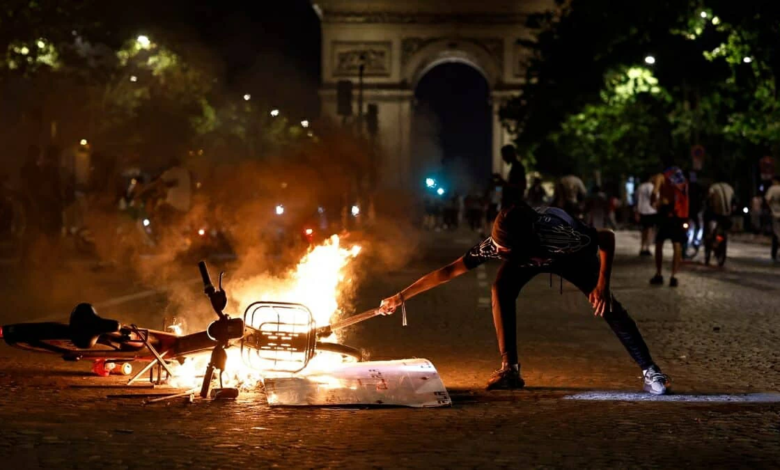

تحولت احتفالات جماهيرية في العاصمة الفرنسية باريس إلى مواجهات عنيفة وأعمال شغب واسعة النطاق، مما أسفر عن تدخل قوات الأمن واعتقال 416 شخصاً وإصابة 7 من عناصر الشرطة. اندلعت الأحداث في أعقاب تجمع الآلاف من مشجعي فريق باريس سان جيرمان للاحتفال بأحد إنجازات فريقهم الكروية، إلا أن الأجواء الاحتفالية سرعان ما خرجت عن السيطرة، لتحل محلها مشاهد الفوضى والتخريب في عدد من أشهر شوارع المدينة.
بدأت الاضطرابات عندما أقدمت مجموعات من المشجعين على إشعال النيران في سيارات وحاويات قمامة، بالإضافة إلى مهاجمة وتخريب واجهات بعض المتاجر والمطاعم في مناطق حيوية مثل شارع الشانزليزيه ومحيط ملعب “بارك دي برانس”، معقل النادي الباريسي. هذه الأعمال دفعت السلطات إلى نشر نحو 22 ألف شرطي في مختلف أنحاء فرنسا تحسباً لأي انفلات أمني. وتصاعدت حدة الموقف مع تدخل شرطة مكافحة الشغب التي استخدمت الغاز المسيل للدموع وخراطيم المياه لتفريق الحشود والسيطرة على الوضع، مما حول أجزاء من العاصمة إلى ساحة مواجهة.
السياق العام وتاريخ شغب الملاعب في فرنسا
لا تعتبر هذه الأحداث معزولة عن سياق أوسع يتعلق بظاهرة شغب الملاعب (الهوليغانز) في أوروبا وفرنسا على وجه الخصوص. يمتلك نادي باريس سان جيرمان قاعدة جماهيرية ضخمة ومتنوعة، من بينها روابط “الألتراس” المعروفة بشغفها الكبير وولائها الشديد، والذي قد يتخذ في بعض الأحيان منحى عنيفاً. تاريخياً، شهدت المدن الفرنسية الكبرى، بما فيها باريس ومارسيليا، مواجهات متكررة بين جماهير الأندية المتنافسة أو بين الجماهير وقوات الأمن، خاصة بعد المباريات الهامة أو تتويج الفرق بالألقاب. وغالباً ما تتداخل هذه الظاهرة مع قضايا اجتماعية واقتصادية أعمق، حيث يجد بعض الشباب في ضواحي المدن متنفساً للتعبير عن غضبهم وإحباطهم من خلال الانتماء إلى هذه المجموعات.
الأهمية والتأثيرات المتوقعة
على الصعيد المحلي، تخلف أعمال الشغب هذه أضراراً مادية جسيمة للممتلكات العامة والخاصة، وتؤثر سلباً على سمعة باريس كوجهة سياحية آمنة، كما تضع ضغطاً هائلاً على الأجهزة الأمنية والموارد العامة. أما على المستوى الوطني، فإنها تعيد فتح النقاش حول سبل التعامل مع عنف الملاعب، وتدفع السلطات الرياضية والحكومية إلى مراجعة الإجراءات الأمنية المتبعة خلال الفعاليات الكبرى. دولياً، تضر هذه المشاهد بصورة كرة القدم الفرنسية وتثير قلق الاتحادات الرياضية الدولية، خاصة مع استضافة فرنسا لبطولات عالمية كبرى مثل الألعاب الأولمبية، حيث يصبح ضمان أمن المشاركين والجماهير على رأس الأولويات.