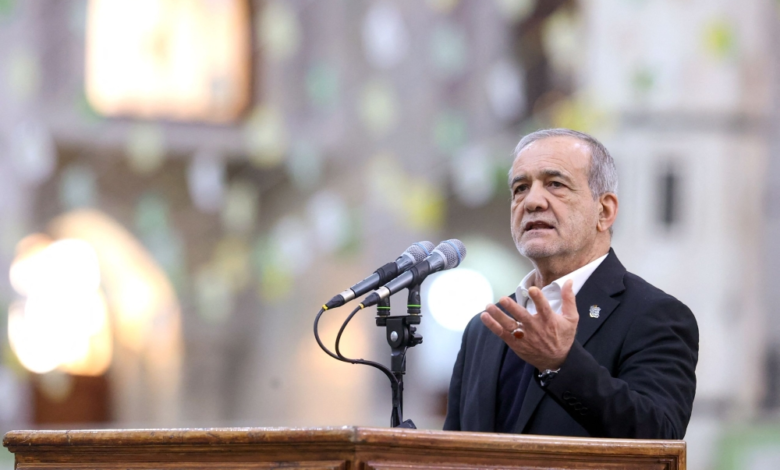
Pezeshkian orders nuclear talks with America: Will the agreement be revived?

In a significant development that could reshape the diplomatic landscape in the Middle East, official media reports in Tehran indicate that Iranian President Masoud Pezeshkian has issued explicit directives to begin direct talks with the United States regarding Iran's nuclear program. This decision comes at a highly sensitive time, amidst escalating geopolitical tensions in the region, lending the move exceptional importance that extends far beyond Iran's borders.
Details of the new presidential directive
Iran's Fars News Agency, citing a well-informed government source, reported on Monday that President Pezeshkian has requested a move toward resuming dialogue with Washington. The agency, along with the state-run Iran newspaper and the reformist Shargh newspaper, confirmed that the discussion specifically concerns the nuclear issue, without specifying a precise timeline for the start of these talks. This approach reflects the new Iranian leadership's desire to explore diplomatic avenues that could lead to easing current tensions.
Historical background and context of the crisis
To understand the significance of this decision, one must consider the complex historical context of the nuclear agreement. Since the United States unilaterally withdrew from the Joint Comprehensive Plan of Action (JCPOA) in 2018 under former President Donald Trump and reimposed crippling sanctions, relations between the two countries have been strained. Tehran responded by reducing its nuclear commitments and increasing uranium enrichment levels, alarming the international community. Previous attempts to revive the agreement have faltered due to disagreements over the scope of sanctions and the required safeguards, making Pezeshkian's current call a renewed effort to break this long-standing deadlock.
Implications of timing and expected impact
Pezeshkian's decision carries profound political and economic implications. Domestically, he came to power on an electoral platform focused on diplomatic openness and lifting sanctions to improve the dire economic situation burdening the Iranian people. Therefore, moving toward negotiations is both a fulfillment of his campaign promises and an urgent necessity for reviving the economy.
At the regional and international levels, the resumption of talks could contribute to reducing military tensions in the region, especially given fears of wider conflicts. International powers, particularly the European signatories to the agreement (France, Germany, and the United Kingdom), view diplomacy as the only way to prevent the proliferation of nuclear weapons and ensure the peaceful nature of Iran's nuclear program. However, challenges remain, especially regarding Washington's willingness to engage with this initiative in the current political climate and how to overcome the deep-seated mistrust between the two sides.