Pezeshkian warns against targeting Khamenei and dismissing the Iranian president

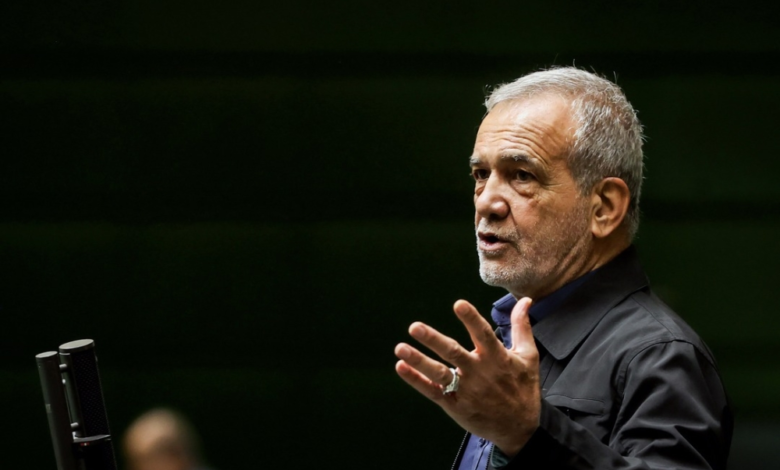
In a new escalation of rhetoric between Tehran and Washington, Iranian President Masoud Pezeshkian warned that any targeting of the Supreme Leader of the Islamic Republic, Ayatollah Ali Khamenei, would be considered a "declaration of war," in a direct response to recent statements by US President Donald Trump hinting at the need for leadership change in Iran.
Red lines and geopolitical tension
In a strongly worded post on the X platform, Pezeshkian wrote that "an attack on our country's great leader amounts to an all-out war with the Iranian people." This warning reinforces the Supreme Leader's position as a red line in Iranian political and military doctrine, as the office of "Guardian Jurist" (Vali-e Faqih) is considered the cornerstone of the regime established in 1979. Observers believe that targeting the head of the Iranian regime is not merely a military act, but is viewed in Tehran as an attempt to undermine the state's legitimacy and very existence, thus warranting a comprehensive military response that could extend beyond Iran's borders to encompass the entire region.
These statements coincide with a state of international anticipation, as the international community fears that any miscalculation between the United States and Iran could ignite a large-scale regional conflict, especially given the existence of thorny issues such as the nuclear file and Iranian influence in the Middle East.
The dismissal of the head of "Irancell" and the digital grip
Domestically, in a sign of the authorities' efforts to tighten their grip on the flow of information, the CEO of Irancell, Iran's second-largest telecommunications operator, Alireza Rafiei, was dismissed. According to the Iranian news agency Fars, the dismissal stemmed from his failure to immediately comply with security agencies' directives to block internet access and restrict online connectivity.
The agency explained that the company "failed to comply with orders from relevant authorities to implement measures related to restricting internet access during crises," leading to Rafiei's dismissal just one year after he took office. This move reflects the paramount importance Tehran places on controlling the digital space as a means of containing protests and preventing the organization of demonstrations via social media.
Background of the protests and the living conditions
Authorities had cut off internet access on the night of January 8 as protests spread across the country, sparked by deteriorating living conditions and the economy. Iran faces significant economic challenges due to international sanctions and mismanagement, leading to high inflation and a decline in citizens' purchasing power, which fuels recurring waves of protests.
Since the start of the crisis, access to the global network has been almost completely impossible, but local media reports and statements from state television on Sunday indicated a limited return of some services, including access to the Google search engine, amid government promises to gradually restore the internet as security is restored.