The Philippines raises the alert level for Mayon volcano to level 3: potential eruption risk

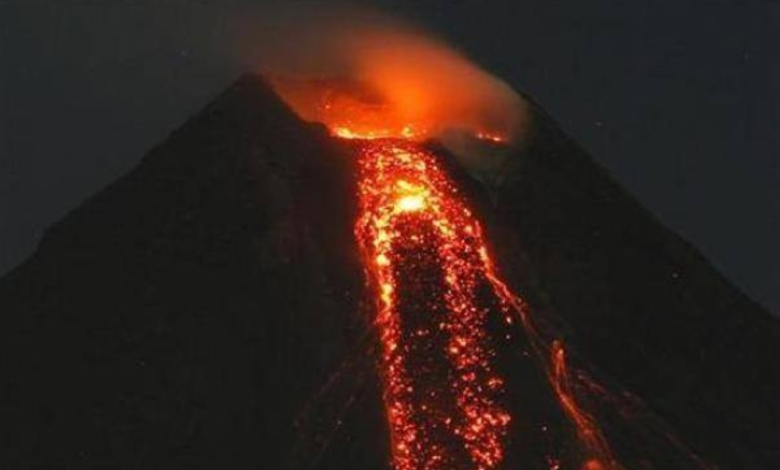
Philippine authorities announced today that they have raised the alert level for Mayon Volcano in Albay province, in the central part of the country, to Level 3. This preemptive move reflects growing concern about potential volcanic activity that could escalate into a dangerous eruption in the coming days or weeks. The decision follows detailed monitoring data that revealed significant geological changes in the volcano's behavior.
Warning details and seismic activity
The Philippine Institute of Volcanology and Seismology (PHIVOLCS) explained that raising the alert level to level 3 on a five-point scale clearly indicates ongoing magmatic disturbances. This means that magma is erupting forcefully upwards within the volcano's crater, forming a lava dome at the summit. Sensors have detected rockfalls and volcanic flows, prompting a warning for residents to immediately evacuate the six-kilometer-long "permanent danger zone" around the volcano to avoid the risks of rockfalls and toxic gases.
Mayon Volcano: The deadly beauty of the Ring of Fire
Mount Mayon, located in the agricultural Bicol region, is one of the world's most active and beautiful volcanoes, thanks to its near-perfect cone shape, making it a popular tourist destination. However, it also poses a constant threat. The Philippines lies within the Pacific Ring of Fire, a vast geographical area of intense seismic and volcanic activity, home to more than half of the world's active volcanoes, making the Philippine archipelago frequently vulnerable to natural disasters.
A history full of volcanic eruptions
This warning is not an isolated event in Mayon's history; the volcano has erupted more than 50 times in the past five centuries. Recent memory recalls the 2018 eruption, which forced tens of thousands of residents to flee their homes amidst thick clouds of ash. Historically, however, the 1814 eruption remains the most tragic and destructive, burying the entire village of Kagsawa under lava and ash, leaving more than 1,200 dead. The bell tower of the old church still stands today as a silent witness to that catastrophe.
Safety and air navigation implications
In light of current developments, warnings have been issued not only to local residents but also to the aviation sector. The Civil Aviation Authority has advised pilots to avoid flying near the volcano's summit, as ashfall and sudden explosions could pose a serious risk to aircraft engines. Local authorities continue to closely monitor the situation and have prepared emergency shelters in anticipation of any escalation that might necessitate large-scale evacuations to ensure public safety.