
تحديات أندية الصندوق في الحصول على شهادة الكفاءة المالية
تعيش الأندية الرياضية السعودية، وتحديداً الأندية الأربعة التابعة لصندوق الاستثمارات العامة، حالة من الترقب والسباق مع الزمن لاستيفاء الشروط الصارمة التي تتيح لها الحصول على شهادة الكفاءة المالية للفترة الأولى من الموسم الرياضي 2026-2027. وتأتي هذه التحركات المكثفة لأندية دوري روشن السعودي للمحترفين ودوري يلو لأندية الدرجة الأولى، في إطار السعي الحثيث لإغلاق كافة القضايا المالية التي صدرت بها أحكام نهائية من غرفة فض المنازعات، وتجنب أي عقوبات قد تعرقل مسيرتها الرياضية.
السياق العام والخلفية التاريخية للحدث
لفهم أهمية هذا الحدث، يجب العودة إلى مشروع الاستثمار والتخصيص للأندية الرياضية الذي أطلقه سمو ولي العهد السعودي، والذي نتج عنه استحواذ صندوق الاستثمارات العامة على نسبة 75% من أندية (الهلال، النصر، الاتحاد، والأهلي). يهدف هذا المشروع الضخم إلى الوصول بالدوري السعودي ليكون ضمن أفضل 10 دوريات في العالم. وفي هذا السياق، استحدثت وزارة الرياضة السعودية نظام “شهادة الكفاءة المالية” كأداة رقابية صارمة لضمان الاستدامة المالية للأندية، ومنع تراكم الديون، وضمان تسديد رواتب اللاعبين والموظفين في وقتها المحدد، مما يعكس بيئة استثمارية رياضية صحية وشفافة تتوافق مع رؤية السعودية 2030.
تفاصيل المواعيد النهائية والاشتراطات الرسمية
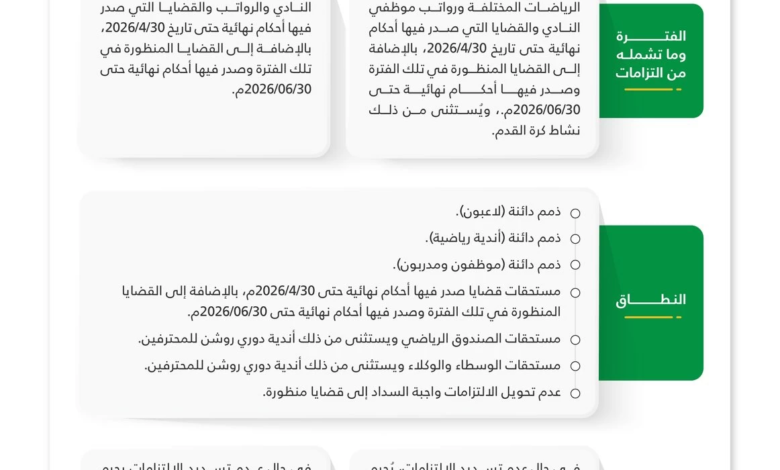
وفقاً للمصادر المطلعة، حددت وزارة الرياضة يوم الثلاثاء الموافق 5 مايو 2026 كآخر موعد لاستقبال المطالبات المالية ضد الأندية الرياضية. وقد اشترطت الوزارة ضرورة توفير وإثبات سداد جميع الالتزامات المالية الخاصة بأنشطة الرياضات المختلفة، بالإضافة إلى رواتب موظفي النادي. كما شددت على ضرورة إغلاق القضايا التي صدرت فيها أحكام نهائية حتى تاريخ 30 أبريل 2026، إلى جانب القضايا المنظورة في تلك الفترة والتي ستصدر فيها أحكام نهائية حتى 30 يونيو 2026. ومن اللافت في هذه اللوائح أنه يُستثنى من هذه الاشتراطات المحددة نشاط كرة القدم، والذي يخضع لجدولة ومعايير تنظيمية أخرى مرتبطة بالاتحادين المحلي والدولي.
التأثير المتوقع محلياً وإقليمياً ودولياً
يحمل هذا الإجراء الرقابي أهمية كبرى وتأثيرات متعددة الأبعاد. على المستوى المحلي، فإن حصول الأندية على شهادة الكفاءة المالية يعد شرطاً أساسياً لتسجيل اللاعبين الجدد، مما يؤثر مباشرة على قوة الفرق وتنافسيتها في البطولات المحلية. إقليمياً ودولياً، بات دوري روشن السعودي محط أنظار العالم بعد استقطاب نجوم عالميين من الصف الأول. الالتزام بمعايير الكفاءة المالية يرسخ صورة ذهنية إيجابية عن الاحترافية العالية والحوكمة الرشيدة في الرياضة السعودية، مما يعزز ثقة المستثمرين الأجانب والشركات الراعية العالمية في السوق الرياضي السعودي ويؤكد على استدامة المشروع الرياضي.
عواقب عدم الالتزام بالمعايير المالية
في حال تعثر أي نادٍ وعدم قدرته على تسديد الالتزامات المالية المطلوبة في الوقت المحدد، فإن العواقب ستكون وخيمة. حيث يُحرم النادي المخالف من الحصول على شهادة الكفاءة المالية، وما يترتب على ذلك من عقوبات إدارية ورياضية. الأهم من ذلك، هو حرمان النادي من الدعم المالي السخي المقدم عبر “مبادرة الحوكمة” للربع الذي يلي فترة الحصول على الشهادة، وهو ما قد يدخل النادي في دوامة من الأزمات المالية التي تؤثر على استقراره الإداري والفني في المواسم القادمة.