Smuggling attempt of 218,000 prohibited pills foiled at Al-Batha border crossing – details of the operation

In a new security strike that confirms the vigilance of the watchful eyes on the security of the homeland, the Zakat, Tax and Customs Authority (ZATCA) at Al-Batha port was able to thwart an attempt to smuggle a huge quantity of pills subject to medical circulation regulation, amounting to 218,280 pills, which were hidden in a professional manner inside a commercial shipment that arrived in the Kingdom.
Details of the security operation at Al-Batha border crossing
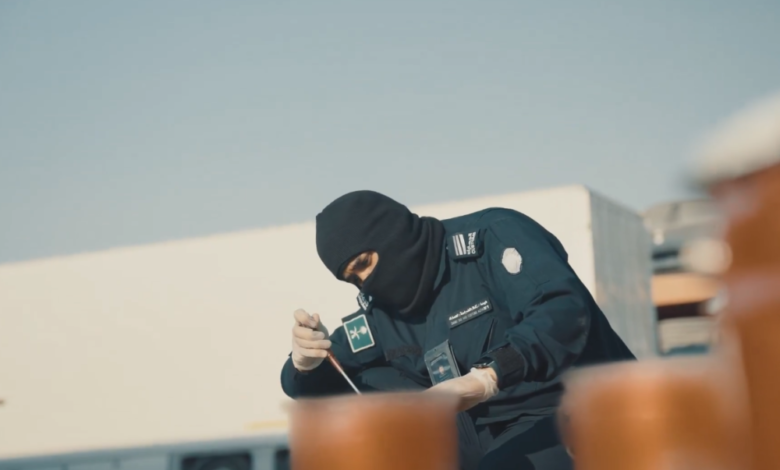
The official spokesperson for the authority, Hamoud Al-Harbi, revealed details of the incident, explaining that during routine inspection procedures on a shipment arriving in the Kingdom through the Al-Batha border crossing, declared as a shipment of paints, customs inspectors became suspicious of its contents. Upon subjecting the shipment to a thorough examination using advanced security technologies and live detection methods (police dogs), a large quantity of prohibited pills was found carefully concealed inside the paint containers, in a desperate attempt to deceive customs officials and smuggle the contraband.
Modern technologies in combating smuggling methods
This operation highlights the significant advancements in the Saudi Arabian customs system. Smugglers constantly devise sophisticated methods of concealment, such as using building materials, foodstuffs, or, as in this case, paints, to smuggle contraband. However, the Zakat, Tax and Customs Authority is vigilant against these attempts by combining the expertise of its inspectors with the latest X-ray technology and smart inspection systems, making it extremely difficult for any suspicious shipment to cross border crossings undetected.
Protecting society and the national economy
Al-Harbi affirmed that ZATCA is resolutely pursuing strict customs control over the Kingdom's imports and exports through all its land, sea, and air ports. These efforts are a cornerstone of the Authority's strategy to enhance security and protect society from harmful substances and materials that may pose a threat to public health or target the nation's youth. Furthermore, countering such attempts directly contributes to protecting the national economy from the damage caused by illicit trade and the unregulated circulation of medically restricted substances.
Call to contribute to combating smuggling
In closing, the official spokesperson reiterated his call to all citizens and residents to actively participate in the fight against smuggling by reporting any information that could help uncover smuggling crimes or violations of customs regulations. The authority clarified that communication channels are available with complete confidentiality via the dedicated security reporting number (1910), email (1910@zatca.gov.sa), or the international number (00966114208417), emphasizing that substantial financial rewards will be offered to informants whose information is verified, while guaranteeing their anonymity.