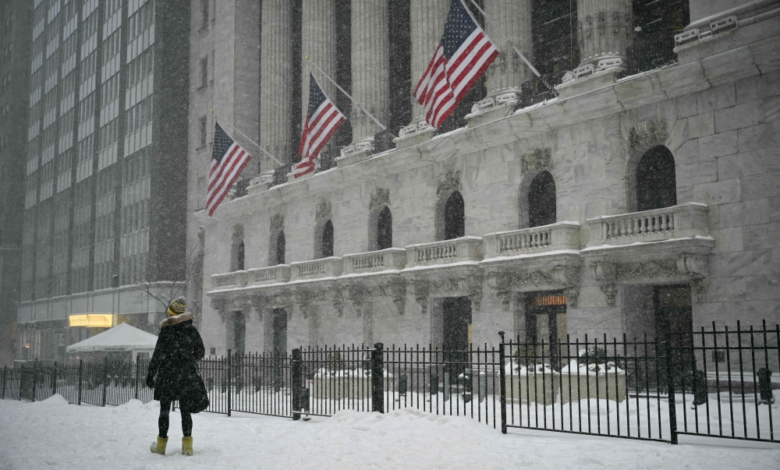

The United States is experiencing near-total paralysis as a severe polar storm sweeps across vast swaths of the country, from southern states like Texas to the Northeast and New England. These extreme weather conditions, whose direct effects began on Sunday, have created immense challenges for both residents and authorities, prompting a widespread mobilization of government agencies.
Power outages and paralysis of air traffic
In a scene reflecting the severity of the storm, more than 700,000 customers were plunged into darkness Sunday morning, with the majority of outages concentrated in the southern United States. Data from energy monitoring sites indicated that Texas, Tennessee, Mississippi, and Louisiana were the hardest hit, with more than 100,000 homes and businesses without power in each state. Alongside the energy crisis, the air travel sector suffered a major setback, with flight tracking websites showing the cancellation of more than 10,000 flights within the United States on Sunday alone, in addition to more than 4,000 cancellations the previous day, leading to stranded passengers and disruptions to travel schedules.
Warnings of freezing and continued risks
The warnings didn't stop there. The National Weather Service cautioned that the danger wasn't over. The agency explained that a very cold polar air mass following the storm would bring a sharp drop in temperatures lasting several days. Forecasts indicated that the effects of snow and freezing rain would extend into next week, with serious warnings about "refreezing," a phenomenon that turns roads and surfaces into slippery, icy layers, posing a deadly risk to drivers and pedestrians. Emergency services, particularly in Texas, North Carolina, and New York, urged residents to stay indoors and only go out when absolutely necessary.
Climate context and the impact of polar storms
This storm has once again highlighted the vulnerability of infrastructure to extreme climate change, particularly in southern states unaccustomed to such severe cold waves. Historically, polar vortex storms descending from the Arctic to the southern United States have caused significant economic losses, ranging from disrupted supply chains and damaged crops to immense strain on power grids that may not be designed to withstand prolonged periods of freezing temperatures. This event serves as a reminder of the importance of preparing for increasingly frequent and intense natural disasters.
State of emergency and official response
In a swift response to the crisis, at least 20 states, in addition to Washington, D.C., declared a state of emergency to facilitate the mobilization of resources and the provision of assistance to those affected. Residents of Washington, D.C., awoke to snow covering the roads, with forecasts predicting the precipitation would turn to sleet. For his part, U.S. President Donald Trump addressed the situation via TruthSocial, assuring the public that he was continuing to monitor the situation and communicate with the affected states, and urging citizens to stay warm and safe during these exceptional circumstances.