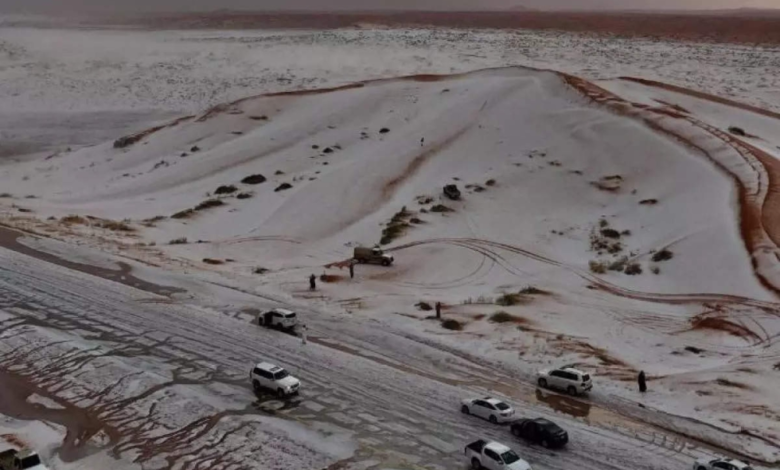

Saudi Arabia is bracing for a severe polar air mass that will cause a significant and sharp drop in temperatures. Its effects are expected to begin on Wednesday and continue until next Saturday, bringing cold weather to eight major regions of the Kingdom. These forecasts are based on reports from the National Center for Meteorology, which indicate rapidly changing weather patterns that warrant caution.
Cold wave path and affected areas
The polar wave will begin to have a direct impact in the northern regions of the Kingdom, then gradually extend to include the capital, Riyadh, and the Eastern Province. Weather maps indicate that the regions of Tabuk, Al-Jawf, the Northern Borders, and Hail, in addition to the northern parts of the Madinah region, will be at the forefront of this cold air mass starting from the middle of this week.
As the days progress, the impact of the weather system expands both temporally and geographically, encompassing wider areas on Friday and Saturday, moving rapidly towards the central and eastern regions of the Kingdom. The Qassim region and the northern parts of the Riyadh and Eastern Provinces will experience the effects of this system over the weekend, bringing distinctly wintry conditions.
Zero-degree temperatures and frost warnings
Temperatures in the northern regions are expected to drop sharply, with minimum temperatures ranging from 3 degrees Celsius to as low as -1 degree Celsius, indicating a high probability of frost formation during the early morning hours. In the Qassim region, northern Riyadh, and the Eastern Province, forecasts indicate minimum temperatures will range between 3 and 4 degrees Celsius, levels that necessitate wearing heavy winter clothing and taking appropriate heating measures.
Climate context and the effects of the winter season
This noticeable drop in temperatures is consistent with the climatic nature of January in the Arabian Peninsula, which marks the peak of winter both astronomically and climatologically. At this time of year, the Kingdom is typically affected by Siberian high-pressure systems or polar air masses from the north, which significantly lower temperatures, particularly in open and desert areas that cool down rapidly at night.
These cold waves have multiple effects beyond simply feeling cold; the expected frost directly impacts the agricultural sector in northern regions, requiring farmers to take precautions to protect their crops. These conditions also underscore the importance of adhering to the instructions of civil defense and health authorities regarding the safe use of heating methods to avoid suffocation or fires, as well as to prevent seasonal winter illnesses that thrive in cold, dry air currents.