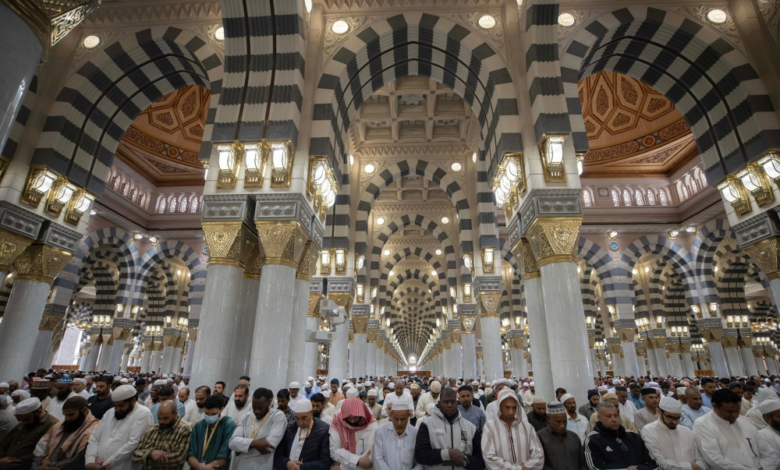
Preparations at the Prophet's Mosque to receive worshippers during the last ten days of Ramadan

Comprehensive preparations to serve the guests of God
The General Authority for the Care of the Two Holy Mosques announced its complete readiness to receive pilgrims wishing to perform Itikaf (seclusion in the mosque) during the last ten days of Ramadan this year. These preparations are part of the Kingdom of Saudi Arabia's ongoing efforts to provide the highest quality services to worshippers and visitors. A comprehensive system has been put in place to serve 3,200 men and women observing Itikaf, ensuring a serene and spiritually enriching environment conducive to devotion and worship in an atmosphere of tranquility and peace.
The historical and spiritual context of seclusion
Itikaf (seclusion for worship) in the Prophet's Mosque is a confirmed Sunnah (practice) of the Prophet Muhammad (peace and blessings be upon him), especially during the last ten days of Ramadan, in search of Laylat al-Qadr (the Night of Decree), which is better than a thousand months. Historically, the Prophet's Mosque has been, and remains, the primary spiritual destination for millions of Muslims who flock to it from all corners of the earth to draw closer to God. Reviving this ritual in the place established by the noble Prophet carries a unique spiritual significance, making its organization and facilitation a great responsibility to which the wise leadership pays close attention to ensure the comfort of visitors.
Preparing the men's and women's sites with high precision
In detailing the operational plan, the Authority explained that fully equipped sites have been designated to accommodate the planned numbers. Areas have been allocated to receive 2,400 male worshippers observing Itikaf on the eastern roof of the Prophet's Mosque, while sites have been prepared to receive 800 female worshippers in the eastern expansion. This meticulous organization ensures easy access and smooth flow of movement within the designated areas to avoid any overcrowding that might disrupt the worshippers' experience. Four main halls, comprising 48 sections, have also been prepared, with each worshipper provided with a personal locker to securely store their belongings and personal items.
Quality services to facilitate the performance of religious rites
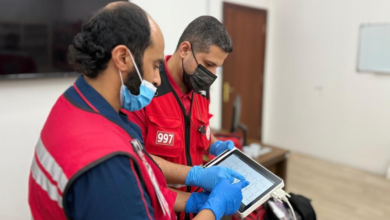
To ensure the comfort of those observing i'tikaf, the authority provided a range of diverse services to meet all their daily needs. These services included central air conditioning and appropriate lighting, continuous perfuming and incense burning, and daily breakfast and suhoor meals. The authority also addressed health and safety concerns, providing safety systems, directional signs, and informational electronic screens, along with 24/7 medical and ambulance services. Additional services included charging stations for mobile devices, laundry facilities, and a comprehensive kit for each person observing i'tikaf containing personal hygiene items and essential bedding and sleeping supplies.
Local and international impact of serving pilgrims to the Two Holy Mosques
The significance and impact of this event are evident on several levels. Locally, this professional organization reflects the advanced crowd management and logistical services provided, aligning with the goals of the Kingdom's Vision 2030, which aims to enrich the experience of pilgrims. Regionally and internationally, these tremendous efforts convey a positive image to the Islamic world of the Kingdom's exceptional care for the Two Holy Mosques and their visitors. Providing these advanced services reinforces the Kingdom's position as the custodian of Islam's holy sites and underscores its unwavering commitment to serving Islam and Muslims, leaving a positive and lasting impression on Muslims worldwide.