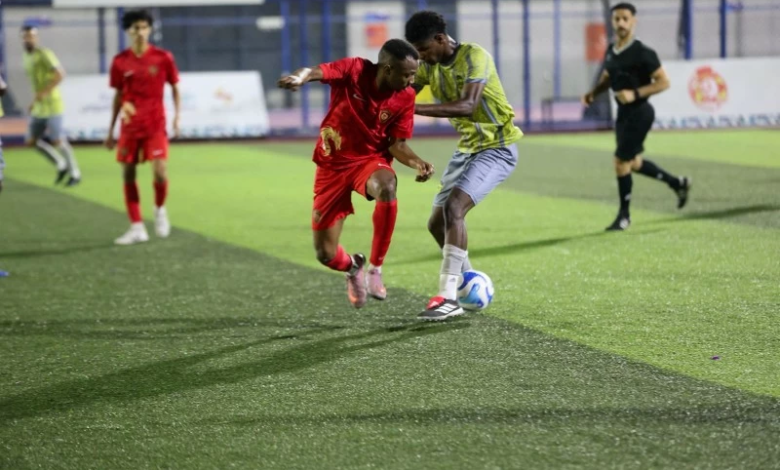

On Thursday evening, February 19, the eyes of football fans in the government and institutional sectors will be on the Olympic Village Stadium, where the second day of the Round of 16 of the “Jeddah 2026” tournament will kick off with two high-caliber matches, which carry a lot of excitement and competitiveness, and promise a football night that cannot be divided between two.
In the first match, kicking off at 11:00 PM, the National Guard team from the Western Sector, the 2025 champions, face a true test of their title defense against the Jeddah Education Department team. This match is particularly important as the National Guard seeks to reaffirm their worthiness of the previous title and capitalize on their top spot in Group B with 4 points, relying on their attacking prowess and the experience of their players in knockout matches. However, the Education Department team does not appear to be an easy opponent, having qualified as runners-up in Group A with the same number of points. This reflects a close level of technical and physical ability between the two sides, making it difficult to predict the outcome of the match.
In the broader context of the tournament, the Jeddah 2026 Championship is one of the most prominent sporting events, bringing together diverse sectors. It aims to promote sportsmanship and fair competition, as well as enhance the physical fitness of the participants. The defending champion's advancement to this stage places added pressure on them, as all teams are eager to dethrone the titleholder, thus intensifying the excitement of the matches.
In a football match that will extend into the early hours of Friday morning, specifically at 12:50 AM, the University team from Jeddah, "Salam," will prepare for a highly anticipated clash with the ambitious "BH" team from Al-Qunfudhah Governorate. The University team enters the match with sky-high morale after qualifying with a perfect record (6 points), topping Group F and commanding respect on the field. However, "BH," who qualified as runners-up in Group E with 3 points, have demonstrated a strong fighting spirit and a fierce desire to cause an upset, relying on their proven ability to bounce back in crucial matches.
The importance of these matches extends beyond immediate qualification, as the winners will face a greater challenge in the quarterfinals, where they will meet the victor of the highly anticipated match between the Ministry of Sports in Makkah and the Police team in Jeddah, scheduled for Tuesday, February 24th. This sequence of matches intensifies the competition, as each team understands that the road to the cup requires overcoming a series of formidable obstacles, promising fans a thrilling football spectacle worthy of the tournament's name and prestige.