Putin: Developing the nuclear triad is an absolute priority after New START

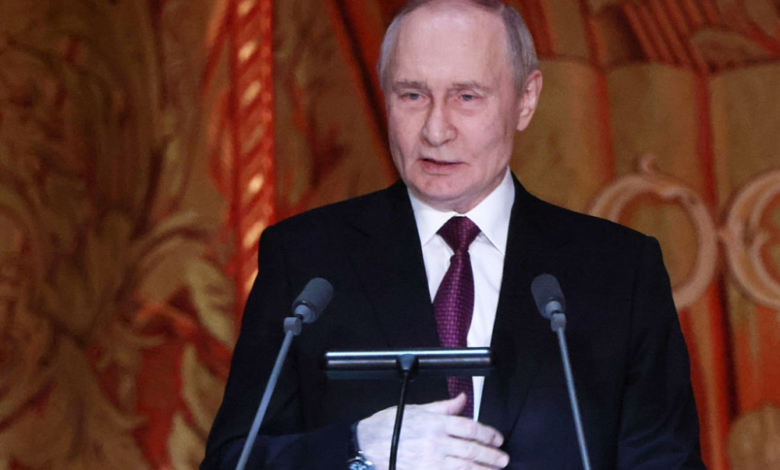
Russian President Vladimir Putin affirmed that strengthening and developing Russia's nuclear forces is now an "absolute priority" for the Kremlin, following recent tensions that led to the suspension of the New START strategic arms reduction treaty between Moscow and Washington. This came during a televised address by the Russian president on the occasion of "Defender of the Fatherland Day," a major national holiday in Russia celebrating its military history and armed forces.
Development of the strategic nuclear triad
In detailing his military plan, Putin emphasized the importance of maintaining the readiness of what is known as the "nuclear triad," a military term referring to the three main methods of delivering nuclear weapons: air-launched strategic bombers, land-based intercontinental ballistic missiles, and submarine-launched ballistic missiles. The Russian president explained that this integration is the sole guarantor of Russia's security and sovereignty, ensuring "effective strategic deterrence" and maintaining the global balance of power amidst rapidly evolving geopolitical landscapes.
Background and significance of the New START treaty
These statements come at a highly sensitive time for international relations, as the New START treaty represented the last major pillar of nuclear arms control between the world's two largest nuclear powers. Signed in 2010, the treaty aimed to establish binding limits on the number of nuclear warheads, missiles, and bombers that both the United States and Russia could deploy. With negotiations stalled and disagreements escalating, the world has entered a period of strategic uncertainty, with observers fearing a new, unchecked arms race.
Modernizing the army and leveraging field experience
In addition to the nuclear component, Putin pledged to continue modernizing conventional forces, emphasizing the need to make the most of the combat experience gained during the ongoing military operations in Ukraine. He affirmed that the Russian leadership would focus on improving all branches of the armed forces, including raising combat readiness, enhancing mobility and maneuverability, and ensuring the execution of operational missions in the most challenging climatic and geographical conditions.
Compliance conditional on nuclear restrictions
Although Russia considers the treaty formally defunct, Moscow has kept the door open for cautious diplomacy. Russia has declared that it will continue to voluntarily adhere to the quantitative limits on its strategic offensive arms under the New START treaty, as long as the United States does the same. This stance reflects Russia's desire to avoid a complete collapse of the international security system while preserving its right to develop its arsenal to ensure its qualitative edge.