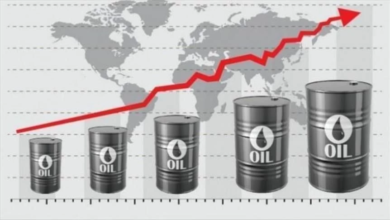

Qatar’s Minister of State for Energy Affairs, Engineer Saad bin Sherida Al-Kaabi, issued strong warnings about the future of global energy markets, predicting a huge jump in oil prices that could reach $150 a barrel within a short period of no more than two to three weeks, in light of escalating geopolitical tensions in the Arabian Gulf region.
In an interview with the Financial Times, Al-Kaabi painted a bleak picture of the current supply situation, indicating that a return to normal supply chains would not be immediate, even if military operations were to cease abruptly. The minister explained that Qatar, one of the world's largest exporters of liquefied natural gas, would need "weeks to months" to restore stability to its supply chains, posing a significant challenge to global markets in the coming period.
The specter of "force majeure" looms over the Gulf
In discussing the legal and logistical ramifications of the crisis, Al-Kaabi revealed the possibility that Gulf exporters might declare force majeure in the coming days if the security situation continues to deteriorate. This legal measure serves as a warning to global markets, as it releases suppliers from their contractual obligations due to circumstances beyond their control, potentially leading to a severe shortage of oil and gas supplies worldwide.
Production stoppage and its impact on global energy security
These statements come in the wake of Qatar's halt to liquefied natural gas (LNG) production last Monday, a precautionary measure taken amid reports of continued tensions and attacks targeting Gulf states in the context of the tit-for-tat exchanges between Iran on one side, and Israel and the United States on the other. This halt carries profound economic implications, given that Qatar's production accounts for approximately 20% of global LNG supply.
Qatari gas is a cornerstone of energy security in both Asia and Europe, where major economies rely heavily on continuous flows to power electricity plants and support industrial sectors. Any prolonged disruption could trigger a global scramble to secure alternative supplies, driving prices to record highs and exacerbating global inflation.
Facility safety and ongoing assessment
The minister concluded his remarks by emphasizing that Qatar's maritime operations have not yet suffered any direct damage, but that the potential repercussions on onshore facilities are still undergoing careful review and assessment to ensure the safety of personnel and infrastructure. This extreme caution underscores the sensitivity of the current situation, as the world anxiously awaits developments in this vital energy region.