The impact of Qatar's gas supply disruption on the global supply surplus in 2026

The importance of Qatari liquefied natural gas in global markets
Liquefied natural gas (LNG) is considered one of the most important pillars of global energy security today, and Qatar plays a pivotal role in this sector as one of the world's largest LNG exporters, alongside the United States and Australia. In a significant development, analysts at Morgan Stanley revealed that a halt in Qatari gas production could have profound repercussions for global markets, most notably eliminating most of the supply surplus that was expected in the coming years, specifically by 2026.
Historical background and Ras Laffan station crisis
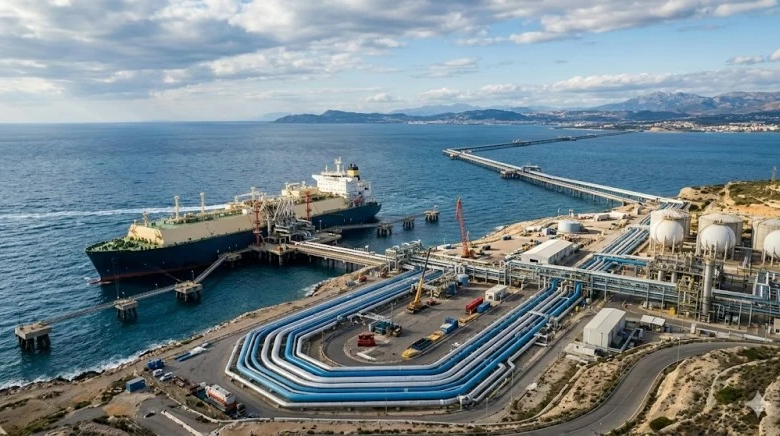
Historically, Qatar's massive gas production has relied on the North Field, the world's largest non-associated natural gas field. Doha has invested billions of dollars in developing export infrastructure, most notably the Ras Laffan terminal, the largest of its kind globally. This vital terminal appeared to be operating at full capacity before its unprecedented shutdown last week, an event that rattled markets and caused prices to nearly double in a short period.
In this context, the Qatari energy minister told the Financial Times that any restart and resumption of shipments could take weeks or even months, adding uncertainty to energy markets already suffering from ongoing geopolitical volatility.
Supply forecasts and the impact of the Qatar gas shutdown
According to a research note dated March 8 by analysts at Morgan Stanley, including Devin McDermott, any extension of the Qatari liquefied natural gas (LNG) outage beyond a month “will quickly lead to a supply deficit.” This assessment, reported by Bloomberg, highlights the fragility of the global supply chain.
Prior to these developments, Morgan Stanley had predicted that the global liquefied natural gas market – which has a total volume of about 420 million tons per year – would face a surplus of up to 6 million tons in 2026. This projected surplus was mainly attributed to the start-up of huge new export projects in the United States and other countries.
Regional and international repercussions on prices
On the international front, the absence of Qatari supplies is putting immense pressure on consumers in Europe and Asia. Since 2022, Europe has increased its reliance on liquefied natural gas (LNG) to compensate for the shortfall in Russian gas supplies, while Asian countries like China and Japan are traditional buyers. The bank warned that if there is no clear timeline for the resumption of production from Qatar within the next week, gas prices could quickly surge above $30 per million British thermal units (MMBtu).
Furthermore, these developments have impacted future projections for expansion projects. Morgan Stanley has postponed its forecast for the first shipments from Qatar's North Field expansion project to the first quarter of 2027. Consequently, its supply forecast for this year has been reduced by approximately one million tons, confirming that the disruption to Qatari gas will have a significant impact on the global supply and demand balance.